No more periods, a little less people-pleasing and the freedom to put yourself first. This World Menopause Day, we're celebrating the good things about menopause, the women who came before us and a future where nobody has to navigate it alone.
World Menopause Day takes place on 18 October each year. In 2026, we're celebrating the positive experiences some women discover after menopause, the growing conversation around women's health and the progress being made in Australia. Because menopause deserves more than whispers, confusion and another conversation about hot flushes¹
There was a time when menopause was something women spoke about quietly, usually between friends, occasionally with their doctor and sometimes not at all. Your mum might have mentioned hot flushes while fanning herself with whatever happened to be nearby, or your grandmother might have referred to it as "the change" before moving swiftly on to something less personal, like what everyone wanted for dinner.
For many women, that was about as much of an explanation as they received.
There was little conversation about why they were suddenly lying awake at 3 am, why their moods seemed unpredictable or why the words they'd been using their entire lives occasionally disappeared halfway through a sentence. They were expected to carry on with work, family and everything else that needed doing, often without understanding the changes happening in their own bodies.
And while we might admire their resilience, we can also acknowledge that they deserved better.
Thankfully, things are beginning to change. Women are sharing experiences that previous generations rarely discussed, researchers are paying greater attention to menopause, and in Australia, women's midlife health is finally receiving some long-overdue recognition.
But this World Menopause Day, we want to talk about something that sometimes gets lost among the discussions about symptoms, treatment options and hormonal changes: what about the good bits?
Although menopause can be difficult, some women describe the years afterwards as among the most satisfying, liberating and enjoyable of their lives. They're not necessarily suggesting that getting older is easy or that every symptom magically disappears, but they are discovering that life after periods can bring freedoms they hadn't anticipated.
And we think those stories deserve to be heard, too.
Welcome to your second spring
There's a lovely expression associated with traditional Chinese medicine for the years surrounding and following menopause: the second spring.²
Rather than seeing the end of reproductive years solely as something to mourn, the expression offers a different perspective on this stage of life, one that recognises the possibility of renewal, changing priorities and greater attention to personal wellbeing.
It's a cultural perspective rather than a medical description, but there's something rather beautiful about the sentiment.
After all, women spend an extraordinary amount of their lives looking after other people. Children, partners, ageing parents, colleagues, friends and occasionally complete strangers who somehow decide we're the right person to solve their problems.
We're often the ones remembering birthdays, organising appointments, replacing the empty toilet roll and knowing exactly where everyone else's belongings are, despite having absolutely no idea where we've put our own glasses.
Somewhere in the middle of all that caring, organising and remembering, our own needs can quietly slip towards the bottom of the list.
For some women, midlife brings an opportunity to reassess that arrangement. Perhaps the children are becoming more independent, priorities are changing or the desire to keep everybody happy simply isn't as strong as it once was.
And perhaps, after years of being told what women should look like, how they should behave and what they ought to achieve by a certain age, there's a growing sense that we've earned the right to decide those things for ourselves.
The internet has given this attitude a rather different name: the crone era. Traditionally associated with an older woman, the word is being reclaimed by some women as a playful rejection of the idea that ageing makes them less relevant or interesting.
We quite like the cheek of it, but there's something about second spring that feels especially appropriate for World Menopause Day.
It suggests that life doesn't have to become smaller simply because one chapter is ending. There can still be plenty of growing, discovering, changing your mind and deciding what comes next.
And you don't need to become a completely different woman to enjoy it. You might simply become a little more comfortable being the woman you've always been.
So, what are the good things about menopause?
It's easy to find information about the challenges of menopause, and that information is important. Women need to understand the symptoms they may experience, the changes that deserve medical attention and the treatment options available to them.
But we rarely spend as much time discussing what women enjoy about life after menopause.
Australian nurse and Edith Cowan University academic Yvonne Middlewick has explored positive experiences reported by women after menopause, including freedom from menstruation, changing relationships with their bodies, greater independence and confidence.³
These experiences aren't universal, and they certainly don't cancel out the difficulties some women face, but they offer a refreshing reminder that menopause is more complicated than the collection of unpleasant symptoms we're usually presented with.
Goodbye periods. You won't be missed.
For women who have spent decades dealing with painful, heavy or unpredictable periods, the prospect of never having another one can be enormously appealing.
No more carrying emergency tampons in every handbag, no more checking the calendar before planning a holiday and no more discovering that your period has arrived five minutes after you've put on your favourite white trousers.
There's also the considerable relief of no longer dealing with menstrual bleeding, particularly for women whose periods have disrupted their work, social lives or everyday comfort.
Of course, perimenopause can make the journey towards that point frustrating. Hormonal fluctuations may cause periods to become irregular, heavier or less predictable before they eventually stop.⁴
And some women experience bleeding patterns that require investigation, rather than simply being assumed to be part of menopause.
But for those who've spent years planning their lives around a menstrual cycle, being able to close that chapter can feel like a genuine freedom.
Your body, your rules
There's another change that some women describe, although it has less to do with periods and more to do with how they think about themselves.
Throughout our reproductive years, our bodies can feel as though they're constantly being discussed in terms of what they should do, might do or haven't done. Fertility, pregnancy, contraception and the expectations surrounding motherhood can occupy an enormous amount of physical and emotional space.
For some women, life after menopause brings a welcome change in perspective. Research examining women's experiences has identified a growing sense of bodily autonomy, with some women describing the freedom to focus on their own needs rather than their reproductive capacity.³
That doesn't mean every woman feels relieved about the end of fertility. For others, it can bring sadness, complicated emotions or a sense of loss, particularly when parenthood hasn't unfolded as they hoped. Both experiences deserve understanding.
But there's something worth celebrating in the idea that a woman's relationship with her body can continue to evolve, and that her value has never depended on whether she can have children.
It's also worth remembering that pregnancy is still possible during perimenopause, so contraception may remain necessary even when periods become irregular.⁴
The glorious freedom of saying no
There are certain things that seem to become easier with age, and for some women, saying no is right near the top of the list.
Not the apologetic kind of no that comes with seventeen explanations and an offer to help next Thursday instead. We're talking about the perfectly reasonable, completely unapologetic kind that doesn't require a committee meeting afterwards.
Perhaps you've spent years agreeing to things because you didn't want to disappoint anyone, volunteering for responsibilities that weren't yours or feeling guilty whenever you prioritised your own needs.
Then, somewhere along the way, you begin to realise that your time and energy are worth protecting.
Research exploring positive experiences of menopause suggests that some women become more comfortable asserting their independence and making decisions based on what matters to them.³
And really, why shouldn't they?
You've probably spent decades learning what makes you happy, what exhausts you and which situations are best avoided altogether. It's perfectly reasonable to start using that knowledge.
The family gathering you don't have the energy to organise? Someone else can have a turn.
The extra responsibility at work that arrives because you're always so dependable? Perhaps it's time to have a conversation about your workload.
And the pressure to behave a certain way because you're now a woman of a particular age can go straight in the bin.
Confidence that comes from knowing yourself
When we're younger, it's easy to imagine confidence as something we'll eventually achieve once we've reached the right weight, earned the promotion, found the relationship or somehow managed to get every part of life looking the way we think it should.
Then we get older and discover that life rarely cooperates with those plans.
Relationships change, careers take unexpected turns, children grow up, friendships evolve and the things that once seemed terribly important can become surprisingly insignificant.
Through all of it, we accumulate experience, perspective and a better understanding of ourselves.
Some women describe increased confidence and self-acceptance after menopause, although these changes are influenced by broader life experiences and circumstances, not simply hormonal changes.³
That distinction matters because menopause isn't a magical personality makeover. You don't wake up on the other side suddenly overflowing with self-belief and an irresistible urge to start a new business.
But the years surrounding it can coincide with a greater willingness to pursue things you've been putting off, speak up for yourself or stop measuring your life against everyone else's expectations.
And perhaps that's one of the loveliest things about getting older. You begin to appreciate how much of life is still ahead of you, rather than spending quite so much time worrying about whether you're doing everything correctly.
Celebrating menopause doesn't mean pretending it's easy
Before we get too carried away with our second spring, it's worth acknowledging something important: not every woman experiences menopause as a liberating new chapter.
For some, the transition brings symptoms that genuinely interfere with their health, relationships, careers and quality of life. Sleep disruption can make everyday responsibilities exhausting, changes in mood can be difficult to manage, and physical symptoms may continue long after periods have stopped.⁴
That's one reason the International Menopause Society has chosen Chronic Pain at Midlife as the official theme for World Menopause Day 2026.¹
The campaign draws attention to persistent pain during midlife and the need for better recognition, assessment and evidence-based care. It also acknowledges that women's pain has too often been dismissed or inadequately investigated.
It's an important reminder that menopause deserves more than a cheerful rebrand.
Women should be able to celebrate the freedoms they enjoy without feeling they must appreciate every part of the experience. Equally, women who are struggling shouldn't be expected to accept their symptoms as an unavoidable consequence of ageing.
You can feel grateful for getting older and still want something done about the aches that are keeping you awake. You can love your life and still find menopause bloody difficult.
There's room for all of it.
And if you're experiencing persistent pain or other symptoms affecting your wellbeing, it's worth speaking with a healthcare professional rather than assuming they're necessarily caused by menopause.
Our mothers didn't always have the words. We do.
If you have the opportunity, ask your mum what menopause was like for her.
You might discover that she remembers very little about it, or that she remembers far more than she's ever mentioned. She might tell you about hot flushes, sleepless nights or a period of feeling unlike herself, followed by the familiar explanation that she simply got on with things because there wasn't much else to do.
You might also discover that she had a perfectly manageable experience and never felt the need to discuss it.
Every woman's story is different, and it's important not to assume that an entire generation experienced menopause in exactly the same way.
What we do know is that menopause hasn't always received the attention it deserves.
Australia's 2024 Senate inquiry into menopause and perimenopause heard evidence about gaps in awareness, access to information, clinical care, research and workplace support. The committee's report also recognised that women's experiences vary significantly depending on their circumstances, including cultural background, disability, access to healthcare and experiences of early menopause.⁵
The findings make it difficult to argue that women have always received the understanding and support they need.
Many of our mothers and grandmothers were managing demanding lives while navigating a stage of health that wasn't routinely discussed around the dinner table, in workplaces or in public.
They didn't have the same opportunities to access information online, compare experiences or discover that something they'd been quietly struggling with was being experienced by women all around them.
Perhaps the most meaningful thing we can do this World Menopause Day is acknowledge that silence without blaming the women who lived through it.
They weren't failing to speak up. In many cases, the conversations simply weren't happening around them.
And now that those conversations are becoming more common, we have an opportunity to make sure the next generation grows up understanding menopause as an ordinary part of women's health rather than something mysterious, embarrassing or best avoided.
The women who helped get everyone talking
A few well-known women have played a significant role in bringing menopause into public conversations, partly because they've been willing to discuss experiences that previous generations of celebrities might have kept firmly behind closed doors.
Actress Naomi Watts has spoken about experiencing early menopausal symptoms at 36 and the fear and shame she felt when she couldn't understand what was happening to her body. Her willingness to discuss the experience publicly has helped draw attention to the fact that menopause doesn't always happen at the age people expect.⁶
In May 2024, Halle Berry made international headlines when she stood outside the US Capitol and spoke openly about menopause while advocating for greater research and education. It was a memorable moment, not least because menopause is still so often treated as something women should discuss quietly, if at all.⁷
And in the UK, television presenter Davina McCall helped bring the subject into mainstream conversation through her 2021 documentary Sex, Myths and the Menopause, which challenged misconceptions and examined how menopause affects women's lives.⁸
These women have different experiences, and their stories shouldn't be mistaken for medical advice or endorsements of particular products.
What matters is their willingness to speak openly.
Because when a woman with an enormous public platform talks about menopause without embarrassment, it can help another woman feel more comfortable mentioning her symptoms to a friend, asking questions at work or raising concerns with her GP.
And that conversation might be the beginning of getting the information or support she needs.
Australian menopause healthcare is finally getting some long-overdue attention
While women have been doing their part by talking more openly, there have also been meaningful developments in Australian menopause healthcare.
In September 2024, a Senate committee released its report into menopause and perimenopause, recommending improvements in research, public awareness, clinical education, workplace support and access to appropriate care.⁵
The report drew attention to the challenges women can face when trying to understand symptoms, find reliable information or locate healthcare professionals with appropriate menopause knowledge.
It also highlighted the importance of recognising different experiences across Australian communities, rather than assuming every woman has the same needs or access to services.
The following year brought changes that may make it easier for eligible women to access menopause-related healthcare.
Medicare now includes specific menopause and perimenopause assessments
From 1 July 2025, new Medicare Benefits Schedule items became available for eligible menopause and perimenopause health assessments.⁹
These assessments can provide an opportunity to discuss symptoms, review relevant health information, consider appropriate investigations and explore management options with a GP or other eligible medical practitioner.
For women who've been unsure how to start the conversation, it's a useful development worth knowing about.
Eligibility requirements apply, and the availability of a Medicare rebate doesn't necessarily mean there will be no out-of-pocket cost. If you're considering an appointment, ask your GP whether the assessment is appropriate for you and whether you're eligible.
Changes to access to menopausal hormone therapy
In March 2025, new menopausal hormone therapy options were listed on Australia's Pharmaceutical Benefits Scheme, the first new PBS listings of this kind in more than 20 years.¹⁰
These changes were intended to improve affordability and access to certain treatment options for eligible women.
Menopausal hormone therapy isn't suitable for everyone, and decisions about treatment need to take individual symptoms, medical history, preferences, benefits and risks into account.
But ensuring women can access reliable information and discuss appropriate options with their healthcare professionals is an important part of improving menopause care.
The conversation is becoming harder to ignore
None of these changes means the job is finished. Women still report difficulties navigating symptoms, finding support and feeling heard, and there are ongoing questions about equitable access to menopause care across Australia.
Nevertheless, the growing attention represents progress.
For a stage of life that affects so many women, menopause has spent an extraordinary amount of time being treated as a side conversation.
It's encouraging to see that changing, and we hope that in another generation, women will look back and wonder why it took quite so long.
Hey Sister! is proudly MTick® certified
With menopause finally getting more attention, there's also been a noticeable increase in products being marketed towards women experiencing perimenopause and menopause.
Greater choice can be a good thing, but it doesn't necessarily make shopping easier. If you've ever stood in a pharmacy trying to work out which products are relevant to your needs, what the claims on the packaging actually mean or whether something has simply jumped on the menopause bandwagon, you'll understand why clearer information matters.
Women have enough on their plates without needing to become amateur detectives every time they walk into a pharmacy.
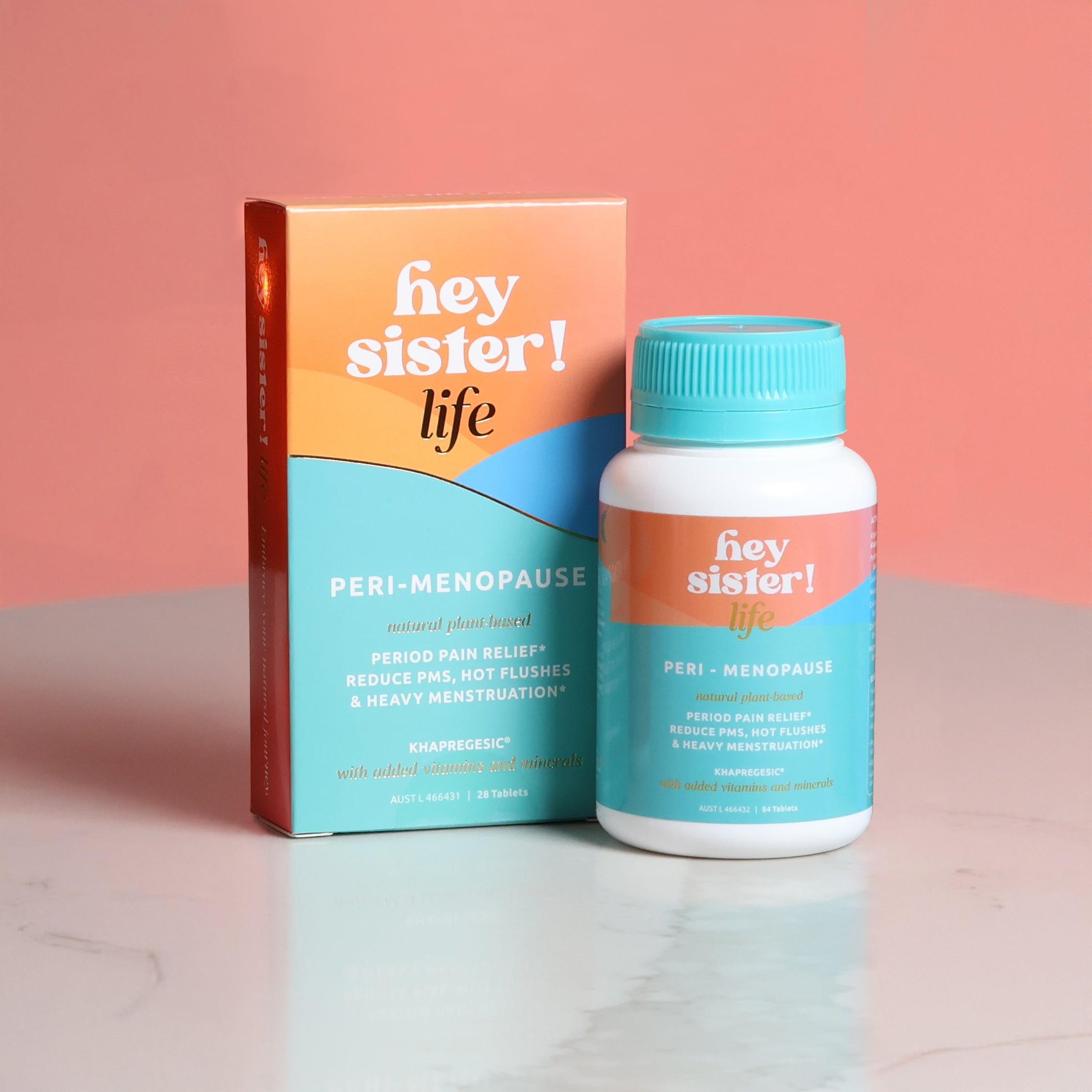
That's one of the reasons we're particularly proud that Hey Sister! is MTick® certified through GenM, with both LIFE Perimenopause and LIFE Menopause carrying the menopause-friendly certification.
The MTick® is GenM's menopause-friendly shopping symbol and certification, designed to help consumers recognise products that have met its menopause-friendly assessment criteria.¹¹
For Hey Sister!, being MTick® certified is part of our commitment to providing clear information and helping women make considered choices about the products they use.
We're also pleased to see the certification becoming more visible across Australia. In February 2026, GenM partnered with TerryWhite Chemmart to introduce the MTick® across a network of more than 620 pharmacies, helping bring menopause-related products and education into everyday shopping environments.¹²
That increased visibility is encouraging because menopause shouldn't be something women have to go looking for in obscure corners of the internet. Information and relevant products should be easier to recognise and understand.
Of course, certification is one piece of information to consider when choosing a product. It doesn't guarantee that a particular product will treat or relieve symptoms, and it doesn't replace reading the label, understanding ingredients or speaking with a healthcare professional about your individual needs.
If you'd like to learn more, explore our MTick® certified [LIFE Perimenopause] and [LIFE Menopause] products, and discover more about GenM's certification criteria.
A few ways to celebrate your second spring
World Menopause Day doesn't need to involve a grand gesture. Sometimes the most worthwhile way to mark the occasion is to start a conversation, learn something useful or give yourself permission to do something you've been putting off.
You might call your mum, aunt or an older friend and ask what menopause was like for her. Not because you're expecting a particular answer, but because there's something valuable about hearing another woman's experience in her own words.
If you've been noticing changes in your own body, you could spend a little time learning about perimenopause and the different signs women may experience. Our guide to 48 signs associated with menopause is a useful place to begin, particularly if you've always assumed it was mainly about hot flushes.
You might decide to book the appointment you've been putting off, especially if symptoms have been affecting your sleep, comfort or everyday life. Taking your questions and a record of what you've been experiencing can help make that conversation more useful.
Or perhaps you'll celebrate in a much simpler way by saying no to something you don't particularly want to do, spending an afternoon doing something entirely for yourself or finally making plans with the friend you've been meaning to catch up with for months.
Whatever you choose, we hope it reminds you that looking after yourself doesn't have to be something you squeeze into the tiny spaces left over after everybody else has been taken care of.
Wondering whether you're experiencing perimenopause?
If you've noticed changes in your periods, sleep, mood or general wellbeing and you're wondering whether perimenopause could be part of the picture, understanding common signs can be a helpful starting point.
Our 60-second perimenopause quiz is designed to help you reflect on what you've been experiencing and organise information you may wish to discuss with your healthcare professional.
It won't diagnose perimenopause or tell you what treatment you need, but it can help you put your experiences into words, particularly if you've found yourself sitting in a doctor's appointment struggling to remember all the changes you wanted to mention.
Take the 60-second perimenopause quiz
And if there's one thing we'd love you to remember this World Menopause Day, it's that you deserve to understand what's happening in your own body.
Our mothers didn't always have the words, the resources or the opportunity to ask the questions we're asking today. We can't change that, but we can keep making the conversation easier for ourselves, our friends, our daughters and every woman who comes after us.
Here's to growing older with more information, more understanding and a little more freedom to do things our own way.
Happy World Menopause Day, sisters. Here's to your second spring, whatever that looks like for you.
Frequently Asked Questions
When is World Menopause Day 2026?
World Menopause Day takes place on Sunday 18 October 2026. The International Menopause Society established the awareness day to encourage education, improve understanding and raise awareness of menopause and the health challenges women may experience during midlife.¹
What is the theme for World Menopause Day 2026?
The official theme is Chronic Pain at Midlife. The International Menopause Society is using the campaign to highlight persistent pain experienced by some women during midlife, including the need for appropriate assessment, better recognition and evidence-based care.¹
Are there positive things about life after menopause?
Yes. Some women report enjoying life without periods, experiencing a greater sense of independence, feeling more comfortable with their bodies and becoming more confident about expressing their needs. Research exploring women's lived experiences has identified these as potential positives, although experiences vary and menopause can also bring significant physical and emotional challenges.³
What's the difference between perimenopause and menopause?
Perimenopause is the transition leading up to menopause, during which reproductive hormone levels fluctuate and periods may become irregular. Menopause is recognised after 12 consecutive months without a menstrual period, provided the absence of periods isn't explained by another cause. The average age of natural menopause in Australia is around 51, although it can happen earlier or later.⁴
Can you still get pregnant during perimenopause?
Yes. Although fertility generally declines as menopause approaches, ovulation can still occur during perimenopause, even when periods are irregular. If pregnancy isn't desired, discuss appropriate contraception and when it can safely be stopped with your healthcare professional.⁴
Does menopause mean your symptoms will disappear?
Not necessarily. Some symptoms improve after the menopause transition, while others can continue or develop later. Experiences vary considerably, and persistent or troublesome symptoms deserve appropriate medical assessment rather than being automatically attributed to menopause.⁴
Can Australian women receive a Medicare rebate for a menopause assessment?
Eligible women may be able to receive a Medicare rebate for a dedicated menopause or perimenopause health assessment under arrangements introduced on 1 July 2025. The assessment can include a review of symptoms, medical history, relevant health needs and management options. Eligibility requirements apply, and out-of-pocket costs may vary between providers.⁹
What does MTick® certification mean?
The MTick® is a menopause-friendly certification developed by GenM. Products carrying the symbol have been assessed against GenM's menopause-friendly criteria. Hey Sister! is MTick® certified through GenM, with LIFE Perimenopause and LIFE Menopause carrying the certification. The symbol helps women recognise menopause-friendly products, but doesn't guarantee that a product will be suitable or effective for every individual.¹¹
Australian Menopause Resources
Jean Hailes for Women's Health
Jean Hailes is an Australian women's health organisation providing accessible information about perimenopause, menopause, symptoms, wellbeing and management options. Its website includes educational resources designed to help women better understand their health.
Explore Jean Hailes menopause information
Australasian Menopause Society
The Australasian Menopause Society provides specialist information about menopause and midlife women's health, including evidence-based resources developed with healthcare professionals.
Visit the Australasian Menopause Society
Healthdirect Australia
Healthdirect provides Australian health information covering menopause, common symptoms, healthcare options and when to seek medical advice.
Read about menopause on Healthdirect
Australian Government Department of Health, Disability and Ageing
The Australian Government provides information about menopause and perimenopause, including public health initiatives and resources for people seeking support.
Explore Australian Government menopause information
Medicare Benefits Schedule
For official information about menopause and perimenopause health assessments, including eligibility and service requirements, refer to the Medicare Benefits Schedule.
Learn about menopause and perimenopause health assessments
References
1. International Menopause Society. World Menopause Day 2026: Chronic Pain at Midlife. https://www.imsociety.org/education/world-menopause-day-2026/
2. SBS Food. Menopause and eating through your 'second spring'. https://www.sbs.com.au/food/article/menopause-and-eating-through-your-second-spring/r13udprhi
3. Middlewick, Y., Edith Cowan University. Is there anything good about menopause? Yep, here are four things to look forward to. The National Tribune, 7 October 2024. https://www.nationaltribune.com.au/is-there-anything-good-about-menopause-yep-here-are-4-things-to-look-forward-to/
4. Jean Hailes for Women's Health. Menopause: Symptoms, causes and management. https://www.jeanhailes.org.au/health-topics/menopause/
5. Parliament of Australia. Senate Community Affairs References Committee. Issues related to menopause and perimenopause. September 2024. https://www.aph.gov.au/Parliamentary_Business/Committees/Senate/Community_Affairs/Menopause/Report
6. People. Naomi Watts discusses experiencing menopause symptoms at 36. June 2024. https://people.com/naomi-watts-panic-menopause-symptoms-at-36-exclusive-8668351
7. Associated Press. Halle Berry speaks publicly about menopause at the US Capitol. 2 May 2024. Original article URL still requires verification.
8. Channel 4. Channel 4 and Davina McCall to break the menopause taboo. 8 March 2021. https://www.channel4.com/press/news/channel-4-and-davina-mccall-break-menopause-taboo
9. Australian Government, Medicare Benefits Schedule. Menopause and perimenopause health assessment services. Effective 1 July 2025. https://www.mbsonline.gov.au/internet/mbsonline/publishing.nsf/Content/Factsheet-Menopause%2Band%2Bperimenopause%2Bhealth%2Bassessment%2Bservices
10. Australian Government Department of Health, Disability and Ageing. Australian Government strengthening Medicare with over $500 million for women's health. February 2025. https://www.health.gov.au/ministers/the-hon-mark-butler-mp/media/australian-government-strengthening-medicare-with-over-500-million-for-womens-health
11. GenM. The MTick®: Menopause-Friendly Product Certification. https://gen-m.com/mtick-certification/
12. GenM. TerryWhite Chemmart x GenM: Bringing menopause visibility to Australia's largest pharmacy network. February 2026. https://gen-m.com/our-partners/terrywhite-chemmart/