Australia, we need to talk
If you have ever trained through cramps so intense that you had to stop and breathe your way through them, while quietly wondering whether anyone would believe how much pain you were in, you are not weak, dramatic or using your period as an excuse.
You are a woman trying to perform inside a sporting culture that has spent years treating the menstrual cycle as something private, inconvenient and largely irrelevant to performance.
For many female athletes, the message has been clear even when nobody says it aloud: turn up, keep quiet and do not let your period affect the plan. If it does affect you, there is a good chance you will be told that you are overthinking it, making excuses or allowing your mindset to get in the way.
Except menstrual symptoms are not a character flaw, and acknowledging them does not make an athlete less committed.
Pain, disrupted sleep, fatigue, digestive symptoms, changes in perceived effort and difficulty recovering can all influence how training and competition feel. Yet women are still regularly expected to work inside sporting systems designed as though their bodies remain exactly the same every day of the month.¹ ²
That is not a mindset problem. It is biology meeting a system that has treated female physiology like an optional extra for far too long.
The “push through it” culture is not toughness
Research involving elite female athletes preparing for the Tokyo Olympic and Paralympic Games revealed just how difficult it can be to compete while managing menstrual symptoms at the highest level. Athletes described pain, fatigue, bloating and low energy, alongside the pressure of preparing for one of the biggest moments of their careers while pretending that everything was fine.²
The expectation in sport has often been painfully simple: keep going.
Do not make a fuss, do not disrupt the programme and definitely do not give anyone a reason to question whether you are tough enough to be there.
The problem is that silence is not the same thing as resilience. When an athlete’s body is communicating that something has changed, and the sporting environment responds by asking her to ignore it, valuable information is being lost.
Australian research suggests menstrual symptoms are common among female athletes and are frequently perceived to affect training or competition, yet open conversations with coaches and meaningful adjustments to training loads remain limited.¹ ²
When nobody asks what the athlete needs, whether the programme can be adapted or whether the symptoms deserve medical attention, that is not a triumphant example of mental strength.
It is a system flaw wearing compression tights.
Why “gender-neutral” training is not neutral at all
For decades, much of sports science treated male physiology as the default, while female physiology was positioned as the complicated side plot that researchers would deal with later.
Hormonal fluctuations were often considered too variable, too messy or too inconvenient to study properly, which meant women were expected to perform inside training systems largely developed around bodies that do not experience the same hormonal patterns.³ ⁴
Calling that approach gender-neutral does not magically make it neutral. In practice, it often means male-default training with a tidy little public-relations spin.
Research examining the menstrual cycle and athletic performance suggests that hormonal changes may interact with several factors relevant to training, including:
-
Perceived effort
-
Thermoregulation and heat tolerance
-
Sleep quality
-
Inflammation and pain sensitivity
-
Mood
-
Recovery capacity³ ⁴
The evidence does not support making sweeping declarations that every woman will perform better or worse during a particular phase, because the effects vary considerably between individuals and even between cycles.
However, that variability is precisely why the conversation matters.
Add cramps, headaches, fatigue, bloating, sleep disruption and a gut that has apparently filed for independence, and ignoring the menstrual cycle no longer looks tough or disciplined.
It starts looking uninformed.
What Australian research says about periods and performance
Two Australian-based research projects are particularly useful when we look at the gap between what female athletes experience and the support they receive.
Research involving elite athletes preparing for the Tokyo Olympic and Paralympic Games found that menstrual symptoms such as pain, bloating and low energy were widespread. Athletes experiencing multiple symptoms were also more likely to perceive that those symptoms affected their performance.²
Another Australian study found that many female athletes believed their menstrual cycle influenced training and competition, yet fewer reported receiving meaningful support, training adjustments or opportunities to speak openly with coaches about what they were experiencing.¹
This tells us that the issue is not rare, imagined or confined to athletes who somehow lack grit. Menstrual symptoms are part of the real performance landscape, but many sporting environments remain underprepared to respond to them.
Women have spent years being told to understand the demands of their sport. It is time sport made a greater effort to understand the bodies of the women participating in it.
The cycle basics, without the beige textbook energy
No two cycles are identical, and the same woman may notice different symptoms from one month to the next.
Stress, travel, illness, heavy training, under-fuelling, hormonal contraception, perimenopause, polycystic ovary syndrome, endometriosis, adenomyosis and life generally doing what life does can all influence cycle length, symptoms and timing.
The following phases offer a broad framework, but they should never be used to dictate what every woman must feel or how every athlete must train.
Menstruation
During menstruation, oestrogen and progesterone are relatively low. Prostaglandins, which help the uterus contract so it can shed its lining, may contribute to inflammation and symptoms including cramps, headaches, fatigue, nausea, diarrhoea and other forms of digestive upset.⁵
This is why telling someone that it is “just a period” can feel spectacularly unhelpful. The phrase skips over the part where her uterus may be staging a monthly protest while she is expected to sprint, tackle, lift, swim or smile politely through a team meeting.
Some women feel capable and relatively symptom-free during menstruation, while others experience pain or fatigue that meaningfully affects their day. Both experiences are real.
Follicular phase
The follicular phase begins with menstruation and continues until ovulation. As the phase progresses, oestrogen generally rises, and some women report feeling more energetic, recovering well or tolerating higher-intensity sessions more comfortably.
That does not mean every woman automatically becomes a personal-best machine during the follicular phase. It simply means that some athletes notice a reliable pattern that may be useful when planning training.
The important word here is personal.
Luteal phase
The luteal phase occurs after ovulation and before the next period. Progesterone rises, resting body temperature may increase and some women experience lighter sleep, changes in mood, bloating, breast tenderness, digestive issues or a higher perception of effort.
Endurance work may feel more demanding for some athletes, particularly in hot conditions, although the evidence remains mixed and individual variation is significant.³ ⁴ ⁶
None of this means women cannot perform during the luteal phase or while menstruating. Women set records, win finals and complete extraordinary physical feats throughout every phase of the cycle.
It means that the body may benefit from different forms of support at different times, and pretending otherwise does nothing to improve performance.
Sport-specific reality: the cycle can show up differently
The menstrual cycle does not affect every athlete in the same way, and symptoms may create different challenges depending on the demands of the sport.
That is why symptom tracking is generally more useful than following generic online instructions that confidently tell every woman exactly how she should train on day 17.
Endurance sports
Running, cycling, triathlon and swimming can feel more demanding for some women during the late luteal phase, particularly when higher perceived effort, disrupted sleep, heat sensitivity or premenstrual digestive symptoms are involved.³ ⁴
When an already difficult session starts to feel like a cruel social experiment, the answer is not always to grit your teeth harder. It may be more useful to consider hydration, electrolyte intake, sleep, fuelling, environmental conditions and whether the planned intensity still makes sense that day.
Try this: Track how you feel across two or three cycles, paying attention to sleep, temperature, digestive symptoms, perceived effort and recovery. When possible, place your most demanding sessions in the windows where you consistently feel strongest, without treating the plan as an unbreakable hormonal rulebook.
Team sports
Football, netball, AFLW, basketball and hockey do not politely reschedule match day because an athlete has severe cramps or has barely slept.
Women may be managing pain, fatigue, digestive symptoms, mood changes and the pressure to “get on with it” while competing inside fixed schedules. Australian research suggests these symptoms are common and are often perceived to affect performance, so this is not about handing out excuses. It is about giving coaches better information for load management and athlete support.¹ ²
Try this: Normalise private and voluntary symptom tracking, create plans for common symptoms and make room for practical game-day options such as warm-up modifications, greater substitution flexibility, access to heat or pain-management strategies, and more deliberate recovery support.
A cycle-aware team culture does not require athletes to announce intimate medical details in the changing room. It requires coaches and organisations to create safe systems through which relevant information can be shared and acted upon.
Strength and power sports
Lifting, sprinting, CrossFit-style training and throwing events may also feel different across the cycle.
Some women report feeling strongest around the middle of the cycle, while others perform best shortly after menstruation. Some notice no clear pattern at all, and others reach the late luteal phase feeling as though someone has replaced their legs with wet cement.
Try this: Record sleep, energy, cramps, mood, soreness and a small number of relevant performance markers across several cycles. Your own repeated pattern will be far more useful than generic advice claiming that all women should train in one particular way.
The goal is not to become a full-time administrator of your hormones. It is to notice whether useful patterns exist and use that information to make better decisions.
The elephant in the locker room: period pain
Painful periods are frequently brushed aside as a minor inconvenience, but dysmenorrhoea is associated with uterine contractions, prostaglandins and inflammation.⁵
For many women, it involves considerably more than feeling “a bit uncomfortable”. Symptoms may include:
-
intense abdominal or lower-back pain
-
nausea
-
dizziness
-
diarrhoea or other digestive symptoms
-
headaches
-
disrupted sleep
-
fatigue that makes “just train through it” feel mildly insulting⁵
Severe, worsening or persistent period pain deserves proper medical attention, particularly when it regularly interferes with training, work, school, sleep or everyday life.
Symptoms may sometimes be associated with underlying conditions such as endometriosis or adenomyosis, and menstrual disturbances can also be relevant in athletes experiencing high training loads, insufficient energy availability or other health concerns.⁵ ⁷
We need to retire the idea that something must be harmless simply because it is common.
Common does not automatically mean normal, and even something considered medically “normal” should not be dismissed when it is significantly affecting a woman’s quality of life.
What cycle-aware training looks like in real life
Cycle-aware training does not mean creating a colour-coded spreadsheet so complicated that managing it becomes a second endurance sport.
It does not mean letting an app boss you around, cancelling every difficult session before your period or assuming your luteal phase has formally rejected all forms of physical exertion.
It means paying attention to your actual symptoms, identifying any reliable patterns and adjusting training, recovery or support when doing so makes sense.
When you feel strong and well recovered
Use that capacity rather than trying to force it into a predetermined phase. When energy, sleep and recovery are good, that may be an appropriate time for higher-intensity sessions, heavier lifts, speed work or planned progression.
For some women, that window appears regularly during the follicular phase. For others, it does not.
When the late luteal phase consistently feels harder
Protect sleep, leave more room for recovery and reconsider sessions designed primarily to prove how tough you are.
That might mean swapping one high-intensity effort for technique work, mobility, a lower-intensity aerobic session or a reduced training volume. It does not necessarily mean avoiding training altogether.
When day one or two of your period is brutal
Shorten the session, reduce impact, use heat, move gently or rest when rest is what your body needs.
Adapting one session does not make you an underperformer. It can help you remain consistent across an entire season rather than sacrificing recovery to satisfy an outdated idea of toughness.
Consistency builds performance. Punishment rarely does.
Why we are proudly HASTA certified
A great deal of menstrual-cycle content swings between two unhelpful extremes.
At one end, the cycle is treated as irrelevant, and women are expected to train as though symptoms should never influence performance. At the other, women are encouraged to become full-time project managers of their hormones, with every mood, meal and workout assigned to a rigid phase-based formula.
Neither approach leaves much room for the actual human being.
That is why we are proud to be HASTA certified through Hormone and Sports Training Awareness.
For us, HASTA is not a decorative badge placed in the website footer. It represents a commitment to:
-
evidence-informed education rather than hormone hysteria
-
treating menstrual health as relevant performance information rather than a private inconvenience
-
normalising conversations that athletes have historically been expected to whisper about
-
recognising individual variation rather than forcing every woman into the same cycle template
-
helping women understand and support their bodies without shame¹ ² ³ ⁴
Women’s sport does not need women to become tougher, quieter or better at pretending nothing hurts.
It needs smarter systems that understand them.
Supporting the body without shame
At Hey Sister!, we are not interested in the tired storyline that periods are embarrassing, women should suffer quietly and pain is simply the price of participation.
Useful support often looks less glamorous than the wellness world would like us to believe. In many cases, it involves the boring but brilliant basics:
-
protecting sleep wherever possible
-
staying hydrated and considering electrolyte needs
-
eating consistently and supporting adequate energy intake
-
building nourishing, anti-inflammatory foods into the wider diet
-
supporting digestive comfort, particularly when prostaglandins contribute to bowel symptoms⁵
-
reducing unnecessary stress and making space for nervous-system recovery
-
seeking professional medical advice when symptoms are severe, persistent or changing
Is it wildly sexy? Probably not.
Is it useful? Absolutely.
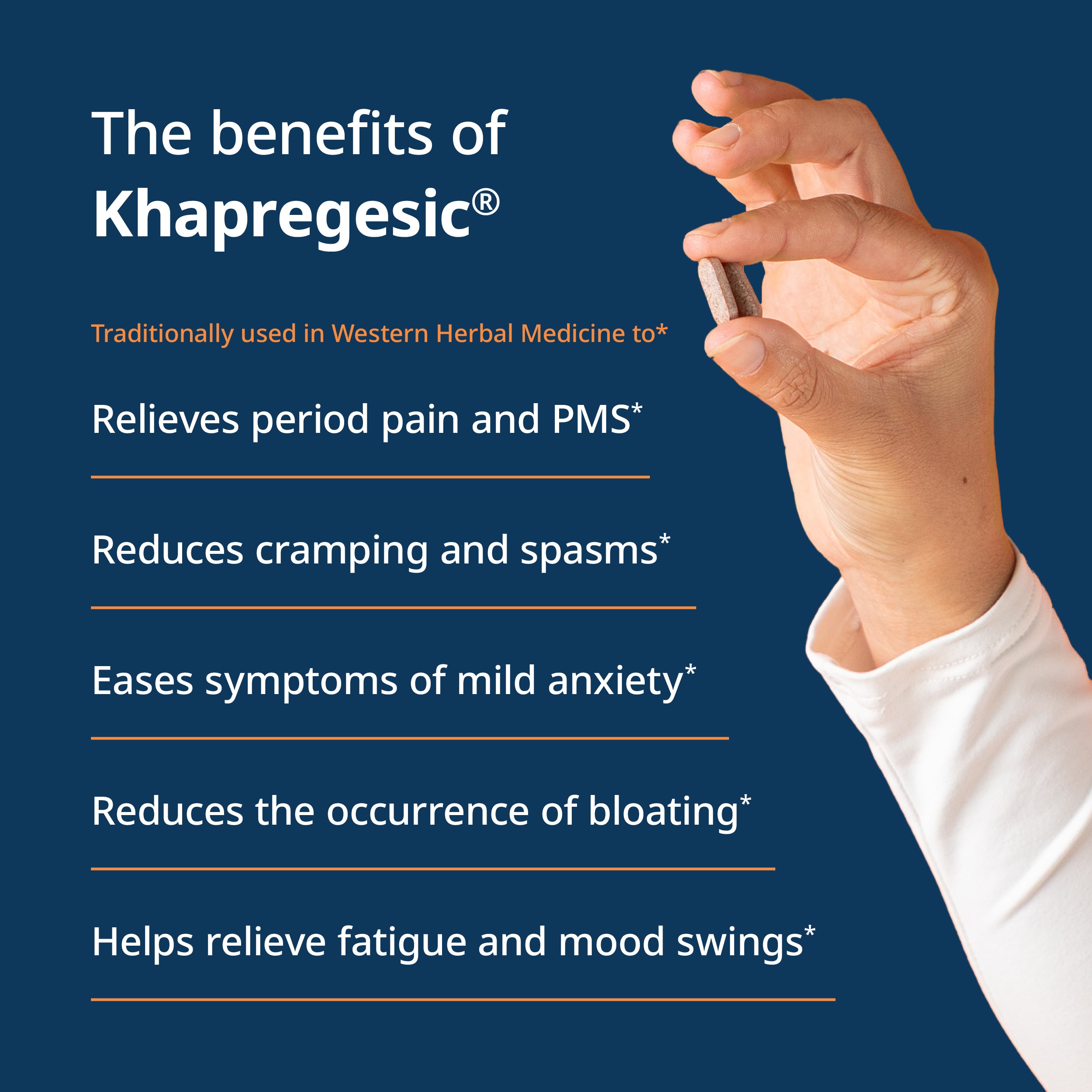
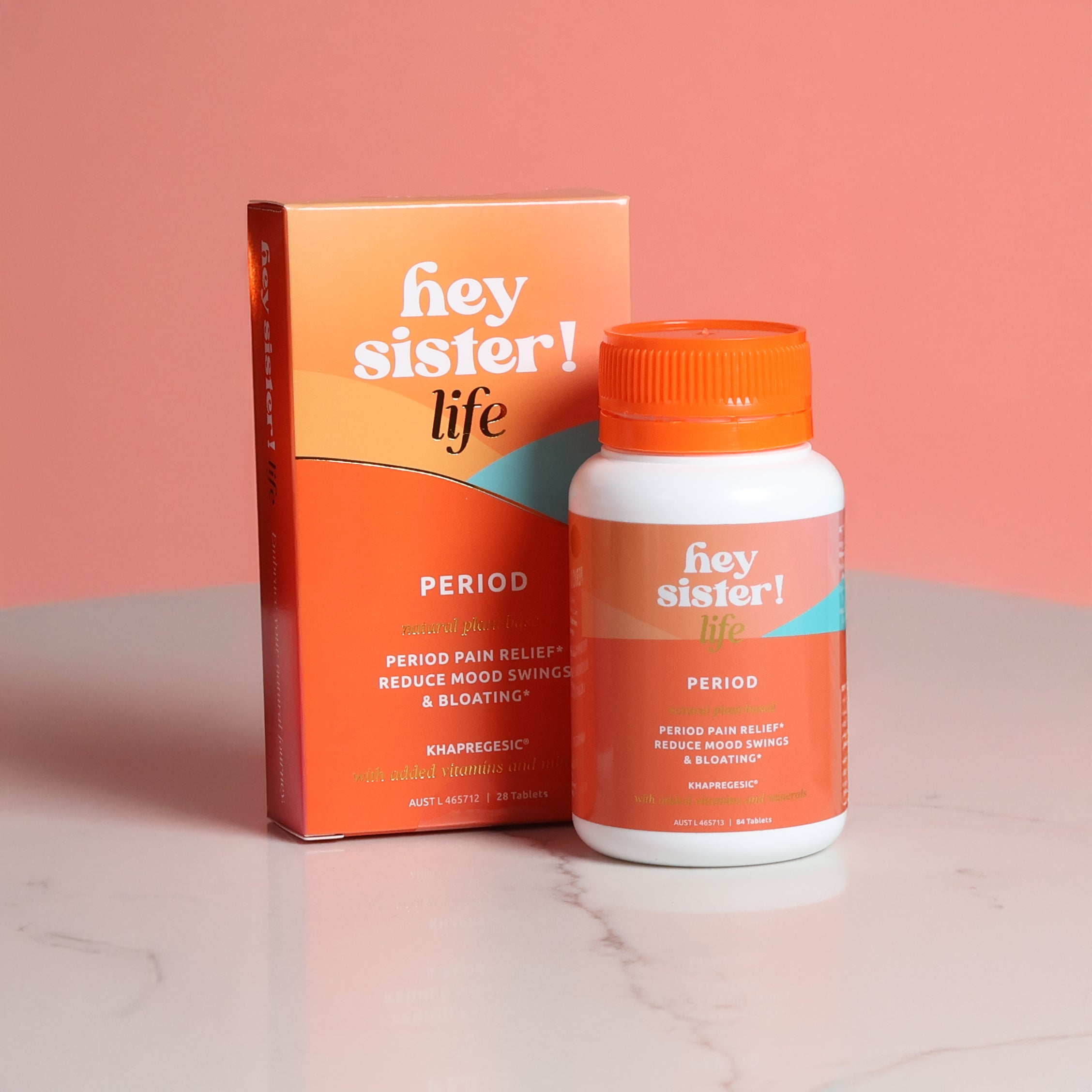
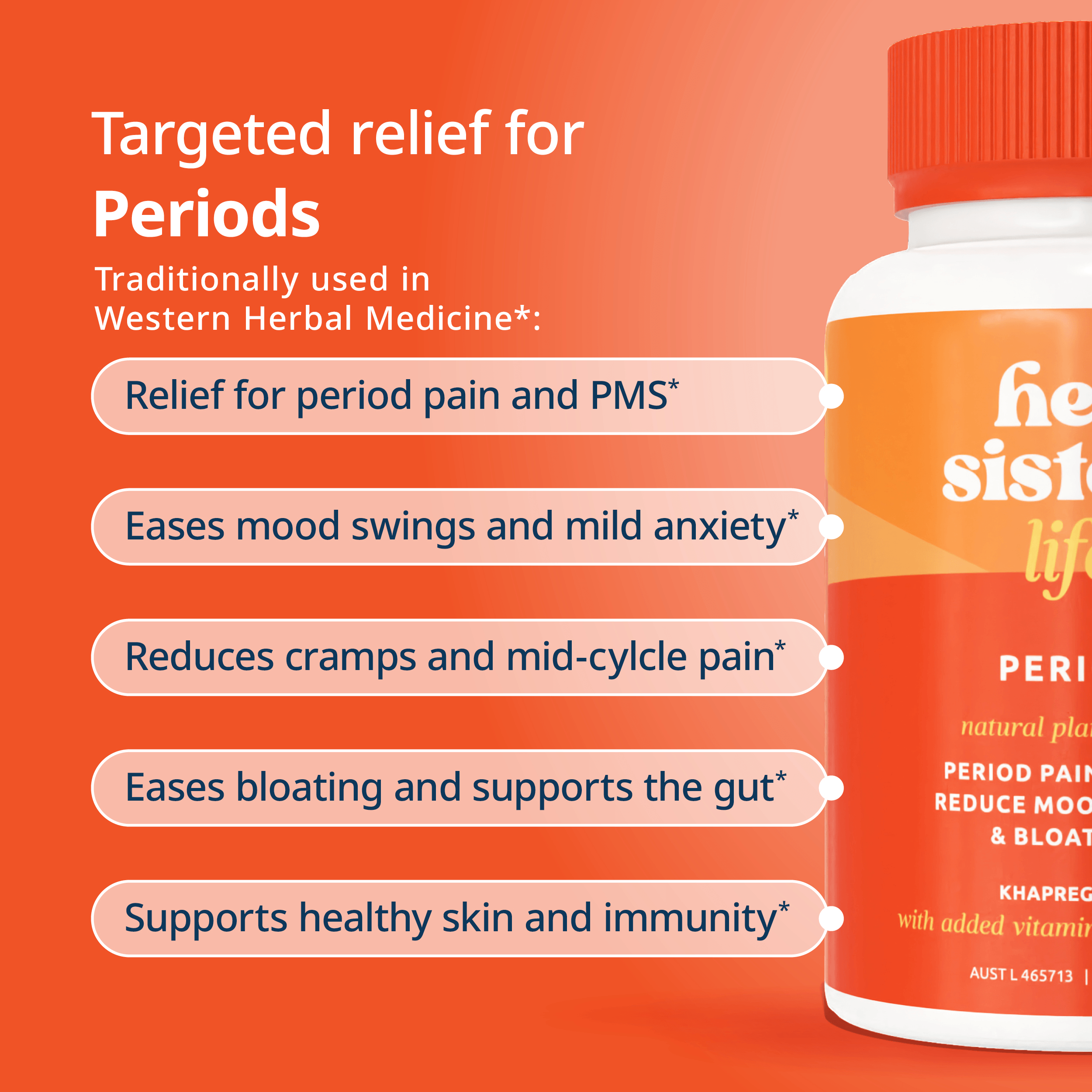
For women seeking a plant-based option as part of their wider menstrual-support routine, Khapregesic® may also be considered in accordance with its directions for use and any relevant professional advice.
It should not be framed as a substitute for investigating severe pain or other concerning symptoms, and sustainable support is rarely built around one desperate rescue attempt on the worst day of the month.
Meaningful change is more often created through what you understand, monitor and do consistently.
The future of women’s sport is cycle-smart
Australian research already tells us that menstrual symptoms are common among athletes and are often perceived to affect training or performance, while communication, education and meaningful adjustments still lag behind.¹ ²
That gap is where progress needs to happen.
Progress means creating environments in which athletes can raise symptoms without being labelled difficult, fragile or less committed. It means giving coaches the education and resources required to respond appropriately, rather than expecting them to guess or avoid the subject entirely.
It also means acknowledging that cycle awareness is not about reducing women to their hormones.
Women are not predictable 28-day machines, and they should not be trained as though a generic cycle chart knows more about them than they know about themselves.
The point is to listen, notice patterns and respond intelligently.
When athletes feel understood, they are more likely to speak openly about what they are experiencing. When coaches have better information, they can make better decisions. When sporting systems stop treating menstrual health as an awkward side conversation, women have a better chance of training consistently and performing at their best.
That is not softness.
That is what smarter sport looks like.
Join the conversation
Have you ever pushed through cramps, fatigue or digestive symptoms because you felt as though you had no other choice?
Has tracking your cycle changed the way you train, compete or recover?
What kind of support would have helped you feel understood without making you feel singled out?
Share your experience in the comments, because there is a good chance someone else has been silently wondering whether she is the only one.
FAQs
Does your menstrual cycle affect athletic performance?
It can, although the effect differs considerably between individuals. Hormonal shifts and menstrual symptoms may influence pain, sleep, mood, perceived effort, thermoregulation and recovery, which can change how training or competition feels.³ ⁴ ⁵
Rather than assuming a specific phase will always improve or reduce performance, athletes may find it more useful to track their own symptoms and patterns.
Is it safe to train on your period?
For most people, training during menstruation is considered safe, and many women train and compete without significant difficulty.
The appropriate intensity will depend on the individual’s symptoms, energy, health and recovery. Medical advice should be sought when pain is severe, bleeding is unusually heavy, dizziness occurs or symptoms feel concerning or different from usual.
What is hormone-aware training?
Hormone-aware training means considering menstrual symptoms, cycle patterns and individual responses when planning training, recovery and support.
It does not require every athlete to follow the same phase-based programme. The focus should remain on the person’s actual experience rather than what a generic app or chart says she should be feeling.
Do athletes perform worse in the luteal phase?
Some athletes report greater perceived effort, sleep disruption, heat sensitivity or premenstrual symptoms during the luteal phase, which may affect how certain sessions feel.
However, the research is mixed and individual variation is considerable.³ ⁴ ⁶
The most useful approach is usually to identify whether the athlete experiences a repeated pattern rather than assuming the luteal phase automatically reduces performance.
Why do I get diarrhoea or nausea during my period?
Prostaglandins can influence smooth muscle and inflammation beyond the uterus, including within the digestive system. This can contribute to diarrhoea, nausea, abdominal discomfort and changes in bowel habits during menstruation.⁵
Persistent, severe or changing symptoms should be discussed with a healthcare professional.
What is the best workout for period cramps?
There is no single best workout because symptoms and preferences vary.
Some women find that walking, stretching, mobility work or light-to-moderate exercise helps them feel better once they begin moving, while others need lower-impact movement, a shorter session or complete rest.
The most appropriate choice is the one that responds to the severity of your symptoms without turning the workout into a punishment.
When should I see a GP in Australia about period pain?
Speak to a GP when pain is severe, worsening, regularly affecting daily life, causing missed work or training, interrupting sleep or failing to respond to your usual support strategies.
You should also seek advice if you suspect endometriosis, adenomyosis or another underlying condition.
“It is common” should never be the end of the conversation when symptoms are significantly affecting your life.
Can cycle tracking help improve training results?
Cycle tracking may help some athletes improve consistency by showing when symptoms tend to occur, when they usually feel stronger and when additional recovery may be useful.
It is less about restricting activity and more about making informed decisions based on repeated personal patterns.
Tracking may include energy, sleep, pain, digestion, mood, bleeding, perceived effort and selected performance measures.
Do hormonal contraceptives change cycle-related symptoms in sport?
Yes. Hormonal contraceptives may change hormonal patterns, bleeding and symptoms, so an athlete’s experience may not match descriptions based on a natural menstrual cycle.
Tracking can still be useful because the athlete’s real-world symptoms and responses remain more important than generic assumptions.
How long can natural or lifestyle-based support take to make a difference?
That depends on the symptoms, their underlying causes and the support being used.
Changes involving sleep, stress, nutrition, digestive health and menstrual comfort may need to be followed consistently across more than one cycle before a meaningful pattern can be assessed.
Natural or lifestyle-based support should not delay medical assessment when symptoms are severe, worsening or interfering with daily life.
References
¹ Western Sydney University - Australian female athlete perceptions of the challenges associated with the menstrual cycle
https://researchers.westernsydney.edu.au/en/publications/australian-female-athlete-perceptions-of-the-challenges-associate/
² BMJ Open Sport & Exercise Medicine (2022) - “That time of the month… for the biggest event of your career”
https://bmjopensem.bmj.com/content/8/2/e001300
³ PubMed (2005) - The menstrual cycle and sport performance
https://pubmed.ncbi.nlm.nih.gov/15892917/
⁴ PMC (2021) - Effects of menstrual cycle phase on elite athlete performance: a systematic review
https://pmc.ncbi.nlm.nih.gov/articles/PMC8170151/
⁵ NCBI Bookshelf, StatPearls - Dysmenorrhoea
https://www.ncbi.nlm.nih.gov/books/NBK560834/
⁶ PubMed (2022) - Premenstrual syndrome symptoms and their impact on sport routines
https://pubmed.ncbi.nlm.nih.gov/36577421/
⁷ Ginekologia Polska (2020) - Impact of competitive sports on menstrual disorders
https://journals.viamedica.pl/ginekologia_polska/article/view/GP.2020.0097