You know the feeling: you got dressed that morning without incident, but by 3 pm your jeans appear to have shrunk two sizes, your stomach feels like a slightly over-inflated beach ball, and you are doing the discreet button-undo in the car while wondering what on earth happened between breakfast and now.
Welcome to period bloat, the uninvited monthly guest that arrives without manners, overstays its welcome and somehow makes every waistband feel personally offensive.
First things first, sister: you are not imagining it, and you have not done anything wrong. Bloating is one of the most commonly reported symptoms before and during a period, while gastrointestinal changes such as abdominal discomfort and changes in bowel habits are also widely reported around menstruation.1 2
There are genuine physiological reasons your stomach can suddenly feel puffier, tighter or more sensitive at certain points in your cycle, so let’s unpack what is going on, why bloating and cramps often arrive together, and what may help when your insides decide to start causing trouble.
Why your stomach stages a monthly protest
Period bloating is rarely caused by one single thing, because changes in fluid balance, digestion and pain signalling can overlap, leaving you feeling swollen, sluggish or as though your digestive system has quietly gone off-script.
Hormonal changes can affect fluid balance
During the luteal phase, which is the part of your cycle between ovulation and the beginning of your period, shifting hormone levels can influence the systems that regulate water and salt in the body.
Research into premenstrual symptoms has linked late-cycle bloating and swelling with changes in the renin-aldosterone system, which helps regulate fluid balance.3 In less scientific terms, the puffy feeling can be part of a genuine physiological process rather than the result of something you ate, wore or somehow failed to do correctly.
One observational study also found that premenstrual oedema may be experienced across several areas of the body, including the abdomen, breasts, face and limbs, which helps explain why the days before a period can sometimes make your entire body feel slightly unfamiliar.4
Your gut gets dragged into it too
Your cycle does not only affect your uterus, because sex-hormone receptors are also found throughout the digestive system. As hormone levels shift, gut movement and sensitivity can change, potentially contributing to constipation, looser bowel movements, abdominal discomfort or that particularly irritating combination of feeling both bloated and backed up.6
Progesterone may slow gut motility for some people before a period, while prostaglandins released around menstruation can affect both the uterus and the bowel. Prostaglandins help the uterus contract, which is why they are associated with cramps, but their effects are not always polite enough to remain in one organ.5 6
This is why bloating, cramping and the sudden need to know the location of every nearby bathroom can arrive as a package deal, with the same cycle-related signals affecting different parts of the body at once.
In a study of otherwise healthy women, gastrointestinal symptoms such as bloating, abdominal pain and bowel changes were commonly reported before and during menstruation, and they were more frequent among women who also experienced period pain.2
In other words, when your cramps and bloating appear to have formed a monthly alliance against you, there is a biological reason for that rather rude little partnership.
Is period bloating normal, or should you get it checked?
Cyclical bloating is common and often improves once your period begins or shortly afterwards.1 However, common does not mean you should dismiss symptoms that are severe, persistent or noticeably different from your usual pattern.
It is worth speaking with your GP or another qualified healthcare professional when bloating continues beyond your period, becomes increasingly painful, comes with pain during bowel movements, represents a significant change from your usual cycle or regularly interferes with work, sleep, exercise or daily life.
Period pain and bloating can sometimes overlap with digestive or gynaecological conditions that deserve proper assessment, so there is no prize for quietly putting up with symptoms that are making your life miserable.5 6
There is also no need to panic or disappear into a three-hour internet research spiral; simply pay attention when your body starts behaving differently, and give yourself permission to ask for help.
What may help with period bloating
There is no universal switch that makes period bloat disappear, and anybody promising to “banish it forever” deserves immediate side-eye. However, a few practical habits may help support comfort and digestion during the part of your cycle when your stomach tends to become particularly dramatic.
Eat regularly and notice what feels comfortable
Large gaps between meals followed by a very heavy dinner can leave an already-sensitive digestive system feeling even more uncomfortable, so smaller or more regular meals may feel easier during the days when you are prone to bloating.
This does not mean following somebody else’s perfect period diet or cutting out half the contents of your kitchen. It simply means noticing which meals tend to sit comfortably and which ones leave you regretting every decision that led you to that particular pair of jeans.
Keep fluids ticking over
It can feel counterintuitive to drink water when you already feel puffy, but regular hydration supports normal digestive function and can be more manageable than suddenly remembering at 6 pm that you have barely had a sip all day.
There is no need to turn hydration into a competitive sport; keeping a bottle nearby and drinking consistently is usually far more realistic than attempting to consume an entire day’s worth in one heroic sitting.
Try gentle movement
A walk, some stretching or a gentle yoga session may help things feel less sluggish, particularly when you have spent most of the day sitting at a desk while your waistband slowly begins negotiations for early retirement.
Movement does not need to mean forcing yourself through an intense workout when you feel uncomfortable. A slow walk around the block still counts, as does stretching in your pyjamas while waiting for the kettle to boil.
Bring in the heat
A heat pack, warm bath or shower may help ease menstrual cramping and the tight, uncomfortable feeling that can accompany it.5
Heat is not glamorous, revolutionary or likely to become the next multimillion-dollar wellness trend, but there is a reason the humble heat pack continues to do some of the hardest work in the period-care cupboard.
Learn your personal bloat amplifiers
Fizzy drinks, large amounts of caffeine, very salty foods or particular ingredients may make bloating feel worse for some people, although triggers vary from body to body.
Rather than banning foods because an influencer declared war on them, pay attention to your own patterns and make changes that are sensible, realistic and based on how you actually feel.
Prepare for the days you know are coming
When your symptoms tend to follow a predictable pattern, preparing before they arrive may reduce some of the last-minute scramble.
That could mean making sure your heat pack is easy to find, planning meals you know your stomach tolerates, keeping comfortable clothes within reach or leaving a little more breathing room in your schedule.
It is not surrendering to your period; it is simply refusing to be ambushed by it every month.
Where Hey Sister! fits
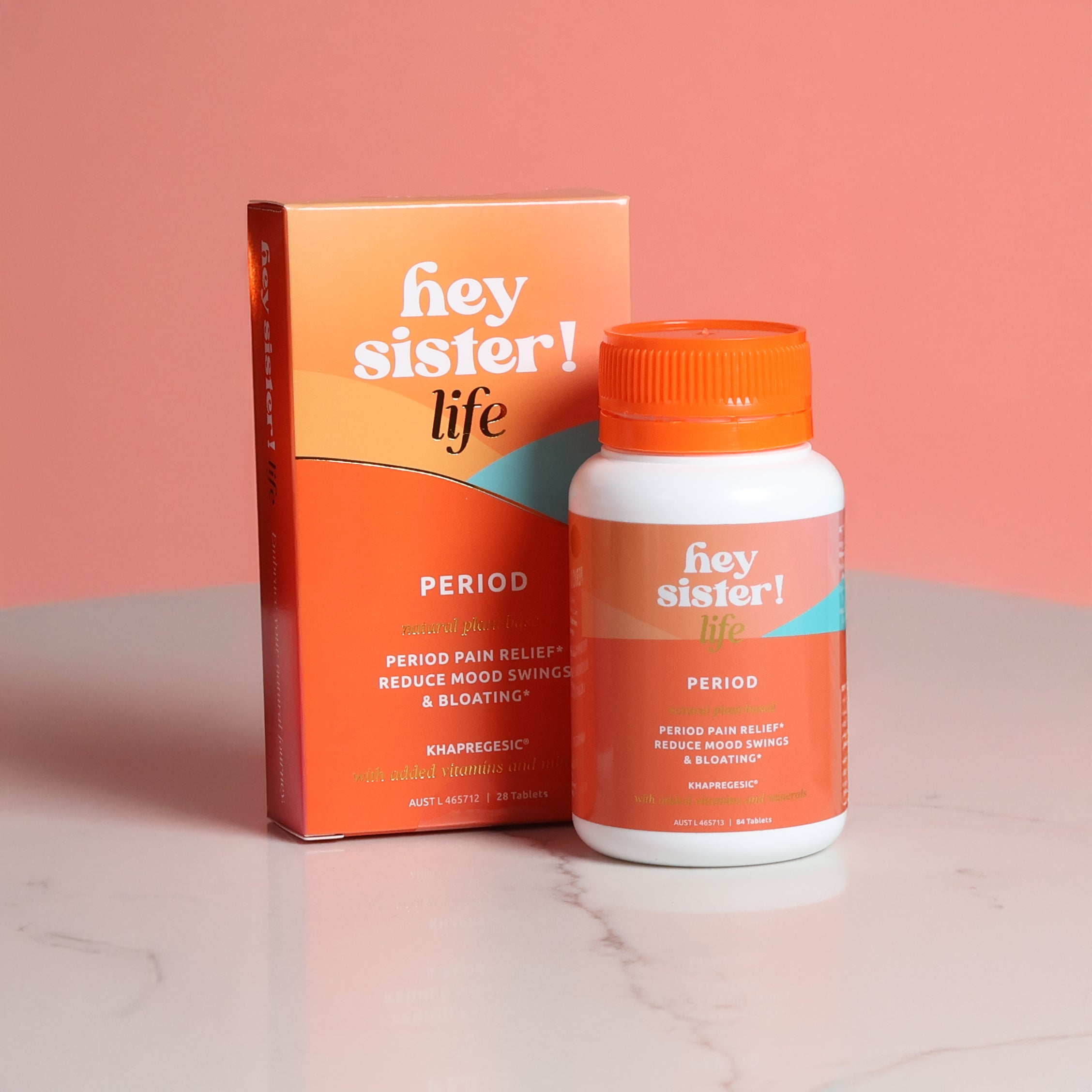
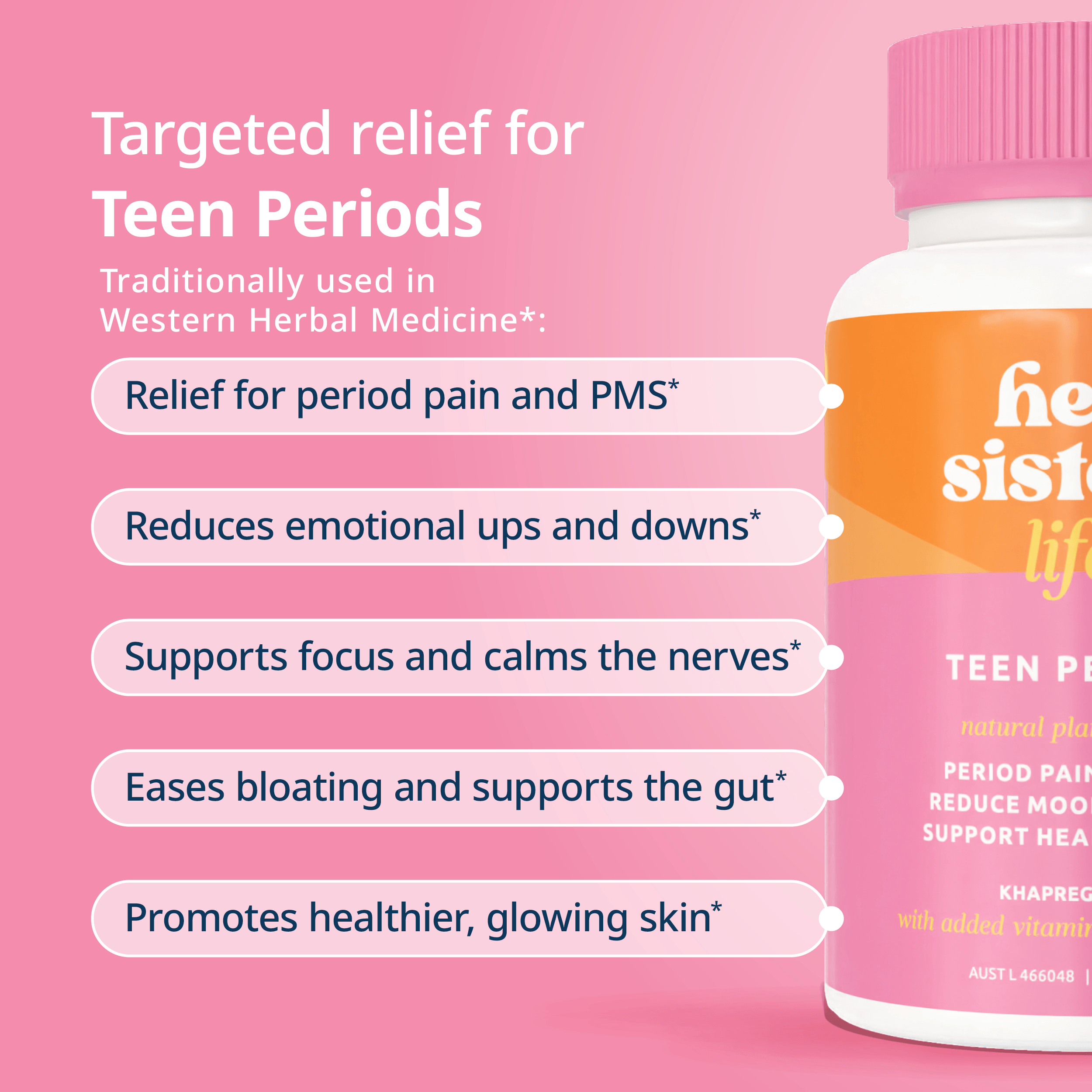
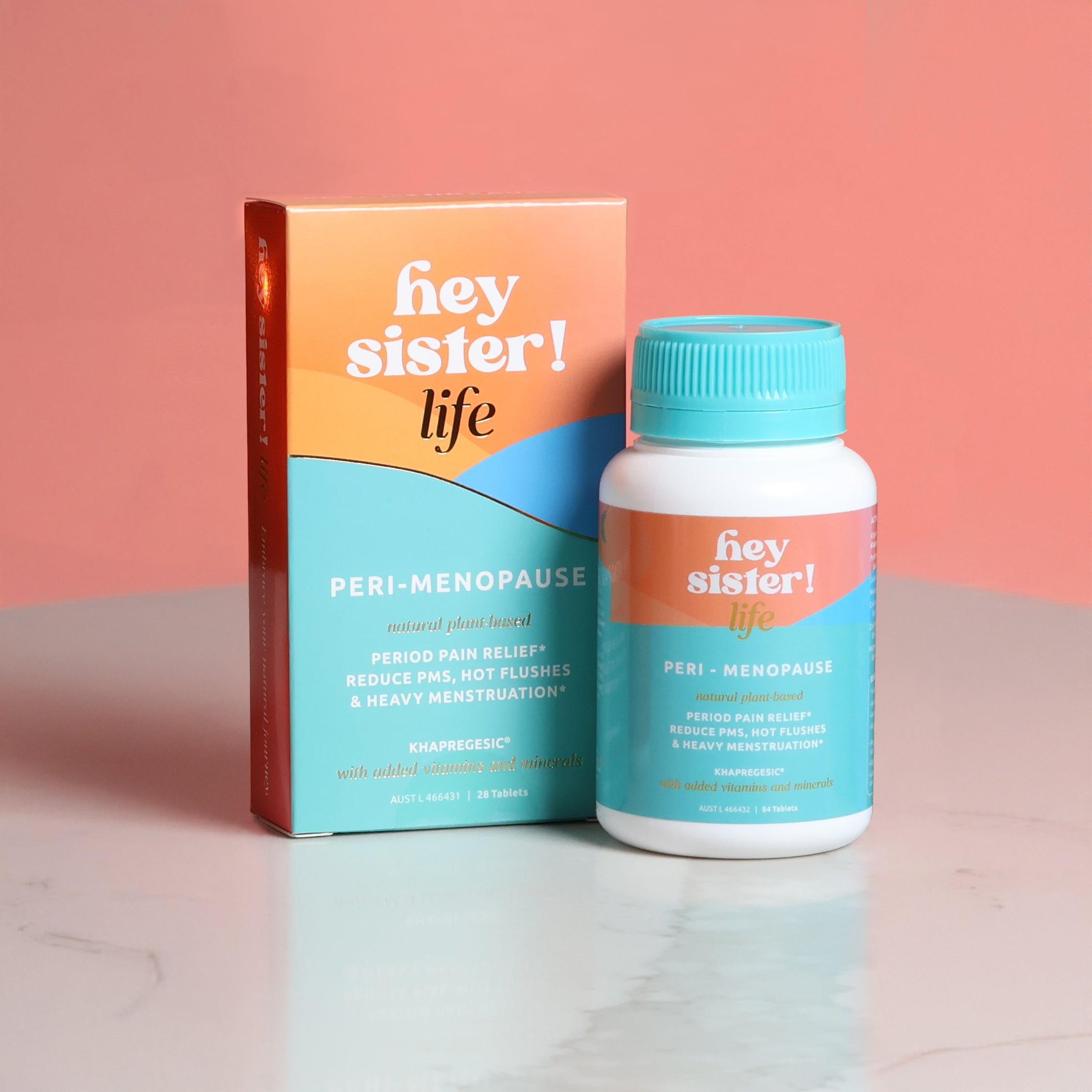
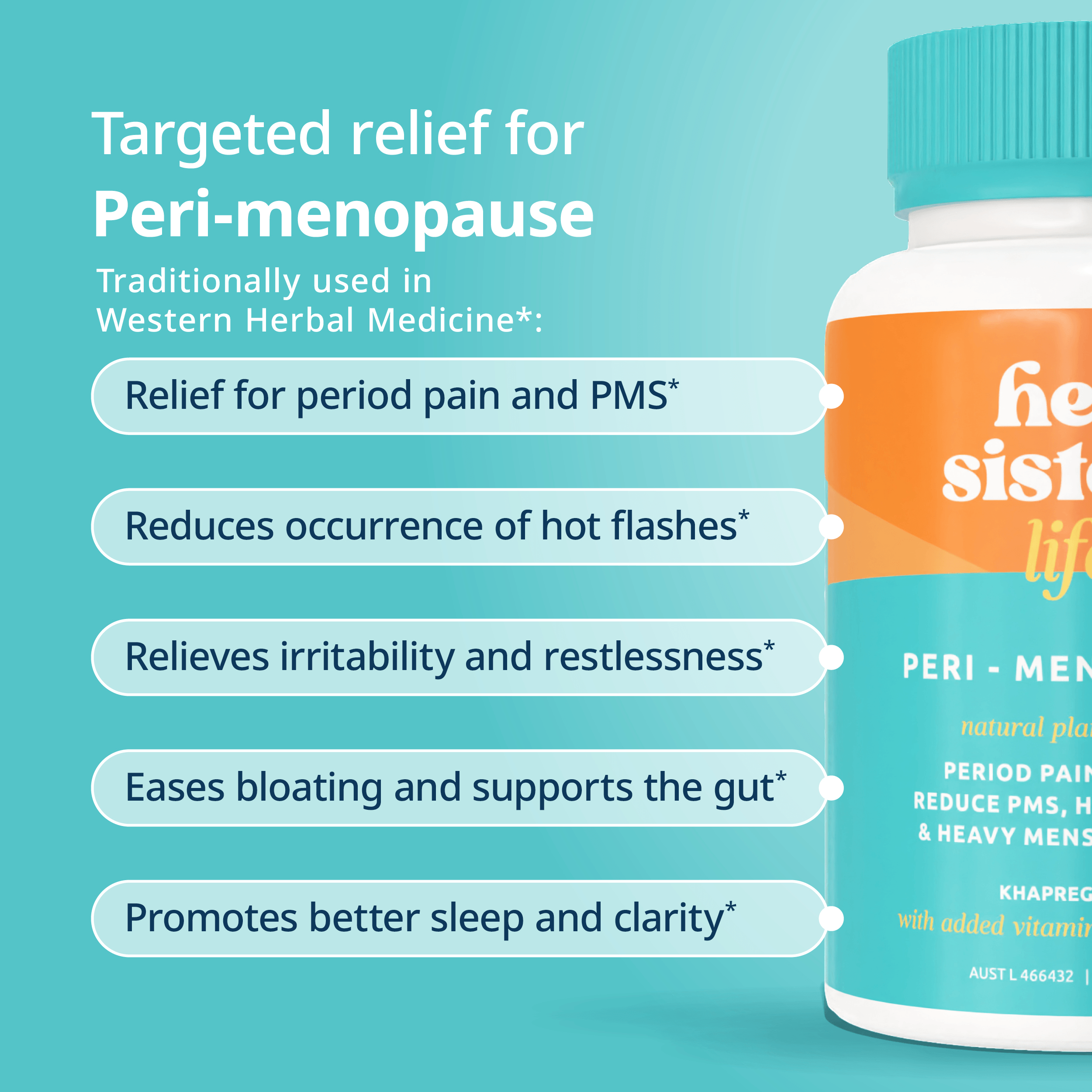
If you have tried the heat pack, the water bottle and the softest trousers you own, and you are looking for plant-based support to add to your routine, this is where Hey Sister! comes in.
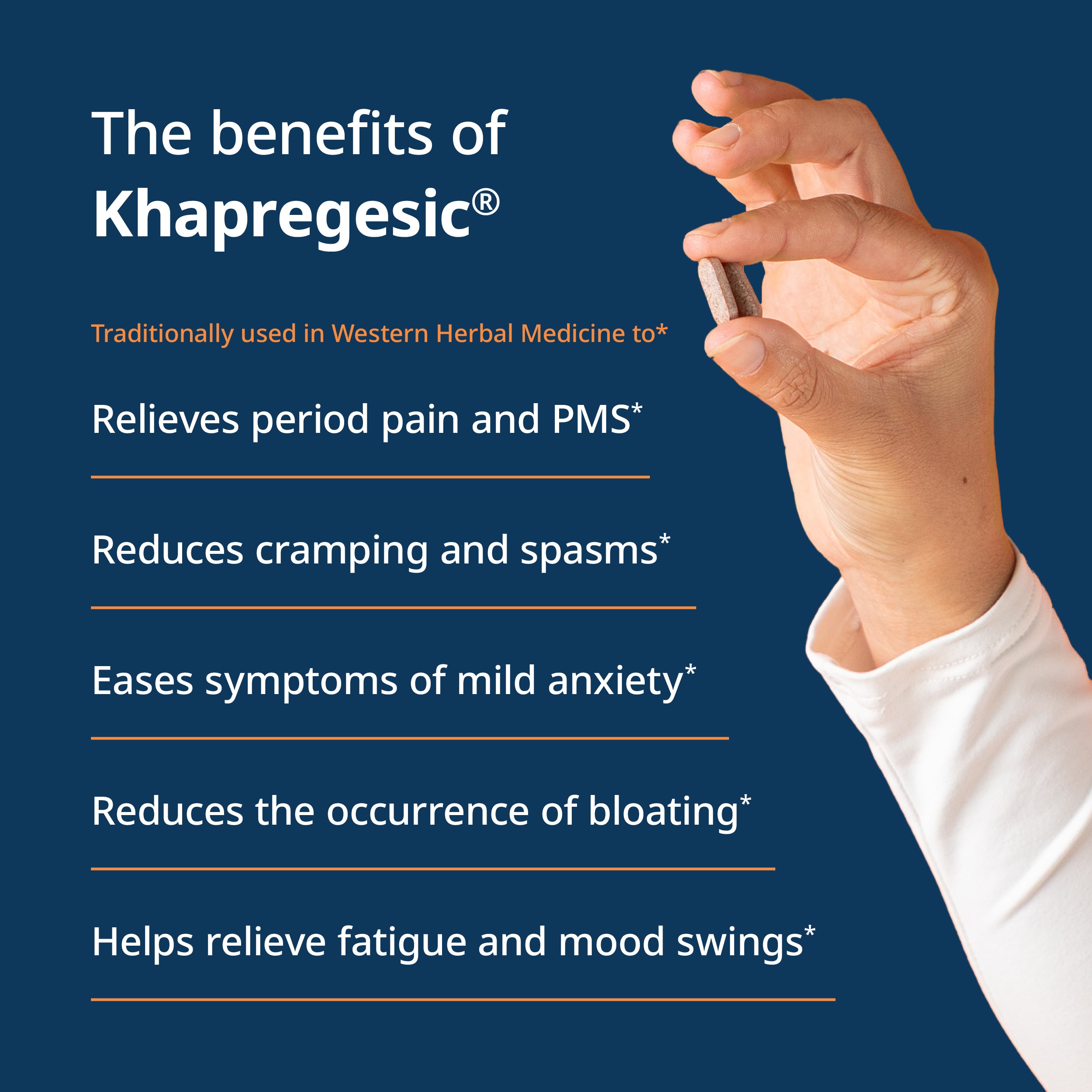
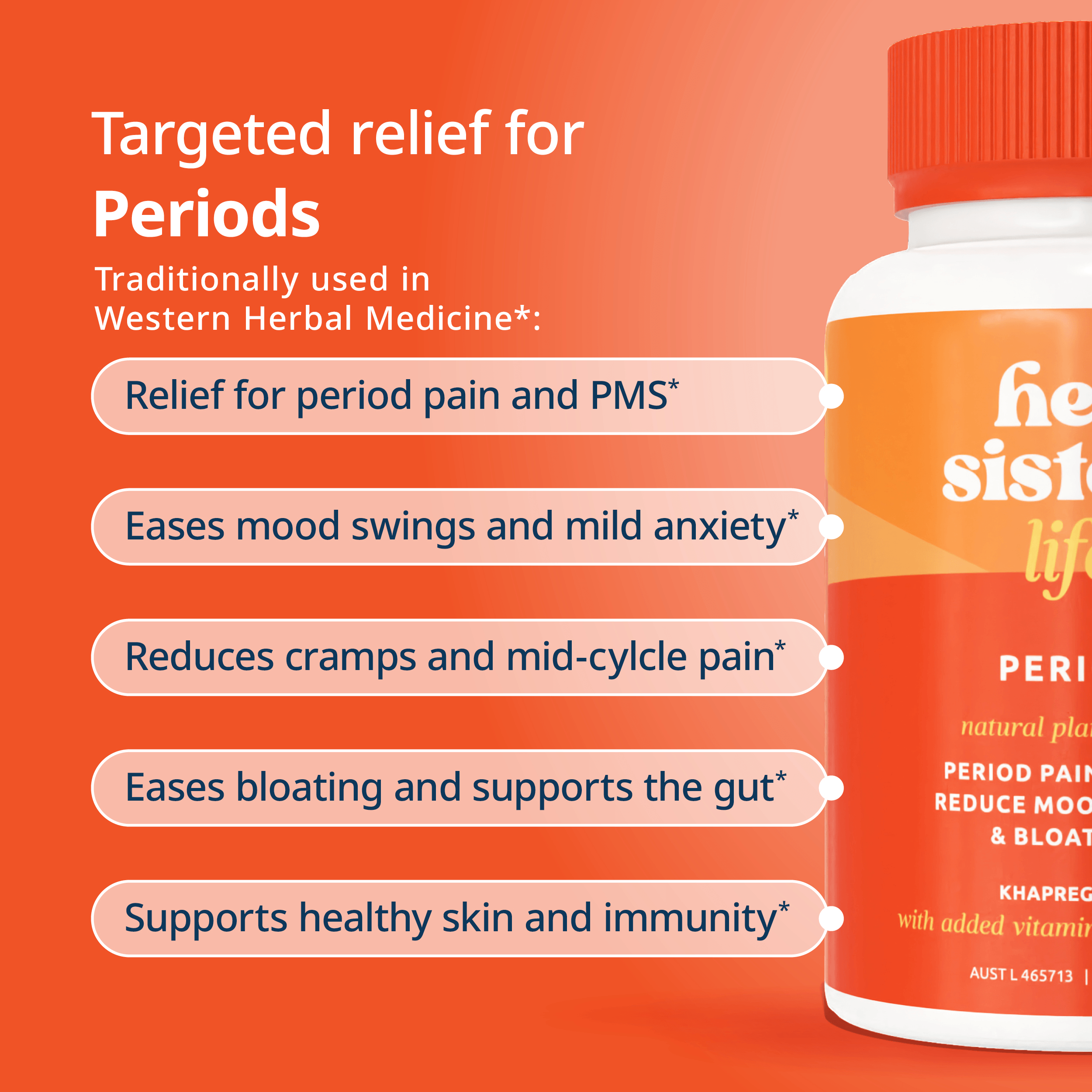
Traditionally used in western herbal medicine to help reduce occurrence of abdominal bloating and relieve menstruation pain and menstrual spasms/cramps.
Explore Hey Sister! period support
Khapregesic® has been the subject of a randomised, double-blind, placebo-controlled clinical trial.7
“Hey Sister! really made a difference to my last two periods, with reduced pain and bloating leading up to my due day and significantly decreased pain during my period, especially on day two, which is when I usually experience the worst pain. I have recommended Hey Sister! to anyone who will listen. I am so thankful I tried it.”
Traditionally used in western herbal medicine to help reduce occurrence of abdominal bloating and relieve menstruation pain and menstrual spasms/cramps. Always read the label and use only as directed.
The bottom line
Period bloating is common, physiological and often connected to the same cycle-related changes that contribute to cramps and bowel symptoms.1 2 5 6
Fluid shifts may leave you feeling puffier before your period, while changes in gut movement, sensitivity and prostaglandin activity can affect both the uterus and digestive system, which is why your abdomen may feel as though it has been given the full monthly workload.
Regular meals, hydration, gentle movement, warmth and a little forward planning may help you feel more comfortable, but symptoms that linger, worsen or regularly disrupt your life deserve a conversation with your healthcare professional.
Your jeans are not necessarily the enemy, although we fully support changing into the softest trousers you own until diplomatic relations improve.
Frequently asked questions
Why do I bloat before my period?
Hormonal changes during the luteal phase can influence fluid regulation, while progesterone and other cycle-related changes may affect gut movement and sensitivity, leaving your abdomen feeling puffy, tight or sluggish.3 4 6
Is period bloating normal?
Yes, bloating is commonly reported before and during menstruation, often alongside abdominal discomfort, cramps and bowel changes.1 2 However, symptoms that are severe, persistent or different from your usual pattern should be discussed with a healthcare professional.
Why do period bloating and cramps happen together?
Prostaglandins involved in uterine contractions can also affect the bowel, while hormonal changes may influence digestion and fluid balance. This means cramps, bloating, abdominal discomfort and bowel changes can overlap during the same part of the cycle.5 6
How long does period bloating usually last?
Period bloating often appears during the days before bleeding and may improve once the period begins or during the first few days of menstruation.1 If it continues well beyond your period, becomes increasingly painful or represents a major change from your normal pattern, speak with your GP.
What may help with period bloating?
Regular meals, steady hydration, gentle movement, warmth and paying attention to your personal food or drink triggers may help you feel more comfortable. Preparing for the days when symptoms usually appear can also make the experience easier to manage.
When should I see a doctor about bloating?
Seek professional advice when bloating is severe, persistent, worsening, unusually painful, accompanied by pain during bowel movements or regularly disrupting your daily life. A significant change from your usual menstrual pattern also deserves proper assessment.
Can Hey Sister! support period bloating and cramps?
Selected Hey Sister! period products contain Khapregesic®.
Traditionally used in western herbal medicine to help reduce occurrence of abdominal bloating and relieve menstrual spasms/cramps. Always read the label and use only as directed.
Join the conversation
What is your go-to move when period bloat arrives: the heat pack, the softest trousers you own, a gentle walk or full blanket-burrito mode?
Tell us in the comments, because period bloat loses some of its power once we stop pretending nobody else experiences it.
References
- American College of Obstetricians and Gynecologists. Premenstrual Syndrome (PMS) . Clinical patient resource.
- Bernstein, M. T., et al. “Gastrointestinal Symptoms Before and During Menses in Healthy Women.” BMC Women’s Health. 2014;14:14.
- White, C. P., et al. “Hormonal and Volume Dysregulation in Women With Premenstrual Syndrome.” Hypertension. 2011;58(5).
- “Characterization of Symptoms and Edema Distribution in Premenstrual Syndrome.” PubMed Central: PMC4362892.
- “Dysmenorrhea.” American Family Physician. 2021;104(2):164-170.
- Houghton, L. A., et al. Review of gastrointestinal and bowel symptoms across the menstrual cycle. PubMed Central: PMC4527267.
- Lopresti, A. L., et al. “An Examination Into the Safety and Efficacy of Khapregesic®, a Khaya senegalensis Preparation, on Pain, Physical and Emotional Wellbeing in Women Experiencing Menstrual Distress: A Randomised, Double-Blind, Placebo-Controlled Trial.” International Journal of Women’s Health. 2025;17:2025-2038. The study was funded by Bioactive Natural Health Pty Ltd.