What today’s mums in Australia are juggling (and why travel, work and wellbeing feel harder than they should).
Motherhood in Australia doesn’t look like it did for our mums — and definitely not like it did for our grandmothers. We’re having babies later, building smaller families, and trying to “do it all”… often while the support systems around us still act like it’s 1995.
And if you’re someone who travels for work, loves a cheeky overseas reset, or is even considering travelling with kids (or while trying to conceive) — the gap between modern motherhood and modern life can feel extra loud.
Let’s talk about what’s actually changed, what’s stayed stubbornly the same, and what would make life feel more supported — at home and on the move.
Motherhood in Australia is happening later (and often with more pressure)
The stats are clear: Australians are becoming mothers later than previous generations.
The ABS reports that in 2022, nearly 60% of births were to mothers aged 30–39, up from less than 20% in 1975. Australia’s fertility rate has also sat below replacement since 1976, with smaller family sizes now the norm.
What that can mean in real life:
-
More people trying to align pregnancy with career stability, housing, finances, and partnership timing.
-
More “sandwich years” — caring for kids while also supporting ageing parents.
-
More mental load (because you’re not just raising a child; you’re running a small logistics company).
And for travellers? Later motherhood often overlaps with the years many people would typically explore, relocate, build a career internationally, or travel for work. So instead of “settle down, then go”, it becomes “do everything… all at once”.
The care gap didn’t get the memo
While motherhood has changed, unpaid care work is still unevenly shared.
Australia’s Status of Women Report Card 2024 shows women do over 9 hours more unpaid work and care per week than men. It also reports female parents do 1 hour 15 minutes more unpaid childcare per day than male parents.
It also highlights a big reality check:
-
35.7% of women say caring for children is the main reason they’re unavailable to start work or work more hours, compared with 7.3% of men.
Same source as above.
So yes — motherhood can be modern, but the workload is still giving “default parent”.
And if you travel (or want to)?
-
Travel planning becomes a second job.
-
The “who packs what / who books what / who knows the nappies are running low” mental load often lands on mum.
-
If you’re travelling for work, the admin of “keeping life running” doesn’t pause — it just moves to a different time zone.
The motherhood penalty is real — and it’s not just personal choice
Australia has made progress, but the evidence still shows childbirth can reshape women’s work lives in ways that don’t bounce back quickly.
A Treasury working paper on the motherhood penalty reports large labour market effects for women after childbirth, driven by changes in employment, hours, and hourly wages — with only limited recovery after five years. It also argues the pattern isn’t simply about “preferences”; workplace norms and institutions play a role.
The OECD echoes this, stating childbirth is “particularly disruptive” to women’s labour market outcomes in Australia, and pointing to reforms like childcare, tax/benefits, and parental leave design as key levers.
For global travellers and mobile workers, this can show up as:
-
Fear of career consequences if you take leave, reduce travel, or turn down postings.
-
Pressure to “prove you’re still committed” — even when you’re running on broken sleep.
-
The awkward reality that flexibility is often offered informally, not structurally (so it can disappear when leadership changes).
“Intensive motherhood” expectations are loud — and they mess with confidence
Not all the pressure comes from policy. Some of it comes from culture.
A scoping review in the Journal of Family Therapy & Review (Wiley) synthesised two decades of research on “good mother” norms and found that expectations are both stable and increasingly varied — meaning many women feel pulled between competing standards (be present, be productive, be calm, be fun, be fit, be organised, be everything).
Qualitative research also captures how this plays out emotionally: guilt, identity shifts, relationship stress, and the sense that the bar keeps moving.
For travellers, the “good mum” noise can be extra spicy:
-
“If I travel, am I selfish?”
-
“If I don’t travel, am I losing myself?”
-
“If I travel with kids, am I making it harder for everyone?”
Truth? There’s no gold medal for suffering. Modern motherhood should include modern freedom — including movement, rest, and identity beyond care.
Support systems still vary wildly depending on where you live (or travel)
Access to maternity and perinatal care isn’t equal across Australia — and mobility can amplify the gaps.
A 2024 qualitative study on rural perinatal care describes barriers such as distance, transport, fragmented services and isolation, and notes enablers like health literacy, social support, effective communication, tech-enabled care, and free services.
Even outside rural contexts, service disruption can shape wellbeing. During COVID-19, a national Australian survey (3,364 women) found many reported feeling unsupported and anxious due to maternity care changes — though some experienced benefits like more rest and bonding.
If you’re a traveller (or relocating), “continuity of care” matters:
-
Who has your history?
-
Who can you contact quickly?
-
Do you know where to go if symptoms change?
-
Are supports culturally safe and relevant?
Migrant mothers’ research also highlights how moving locations can increase isolation, and how online communities can help fill the support gap.
Mental health support is improving — but needs to be easier to access
Motherhood isn’t just logistics. It’s a full-body, full-mind transition.
Australia’s COPE perinatal mental health guideline emphasises routine assessment of social and lifestyle factors alongside screening, reflecting the importance of early identification and support.
For travelling women, mental wellbeing can be hit by:
-
Sleep disruption (new baby + jet lag = rude)
-
Loss of familiar supports
-
Anxiety about healthcare access in unfamiliar places
-
The constant “on” feeling of being the organiser
Support should travel with you — and in 2026, there’s no reason it can’t be more accessible, more flexible, and more human.
So… have we kept up?
Not fully.
The evidence points to a mismatch:
-
Motherhood is happening later and in more complex life contexts (careers, finances, mobility). (ABS)
-
Care responsibilities are still uneven. (Office for Women)
-
Career penalties after childbirth remain significant and long-lasting. (Treasury, OECD)
-
Social expectations remain heavy, sometimes contradictory, and often guilt-fuelled. (Review + qualitative studies)
-
Access to care and support is patchy — especially across geography and life transitions. (rural access study, COVID maternity care study)
-
Mental health guidance exists, but real-world access and continuity still vary. (COPE)
What helps (and what we can actually do about it)
1) Design support for modern life — not “ideal life”
Policies and workplace practices that consistently show up as key levers include:
-
Better parental leave design and uptake across genders (OECD; WGEA notes employer provision and the role of policy design).
WGEA parental leave info: https://www.wgea.gov.au/parental-leave
OECD report: https://www.oecd.org/.../3470e5d8-en.pdf
2) Treat care as infrastructure
If care work remains unequal, everything else becomes harder: careers, travel, health, relationships. (Office for Women 2024)
3) Make continuity of care easier — especially for mobile lives
Rural and pandemic-era evidence both point to how quickly stress increases when care is fragmented. Tech-enabled care and clear communication help. (PubMed rural study; COVID maternity survey)
4) Normalise the “identity shift” without romanticising burnout
The research on motherhood norms and lived experience makes it clear: pressure isn’t just personal — it’s cultural. We can name it, and we can soften it. (Wiley review; qualitative study)
5) Build small, sustainable body-support habits
No miracle claims. Just real-life support:
-
Hydration, gentle movement, regular meals (especially while travelling)
-
Sleep protection where possible (and compassion when it’s not)
-
Stress downshifts: breathwork, sunlight, magnesium-rich foods where appropriate
-
Plant-based routines many people use to support cycle comfort, digestion and calm
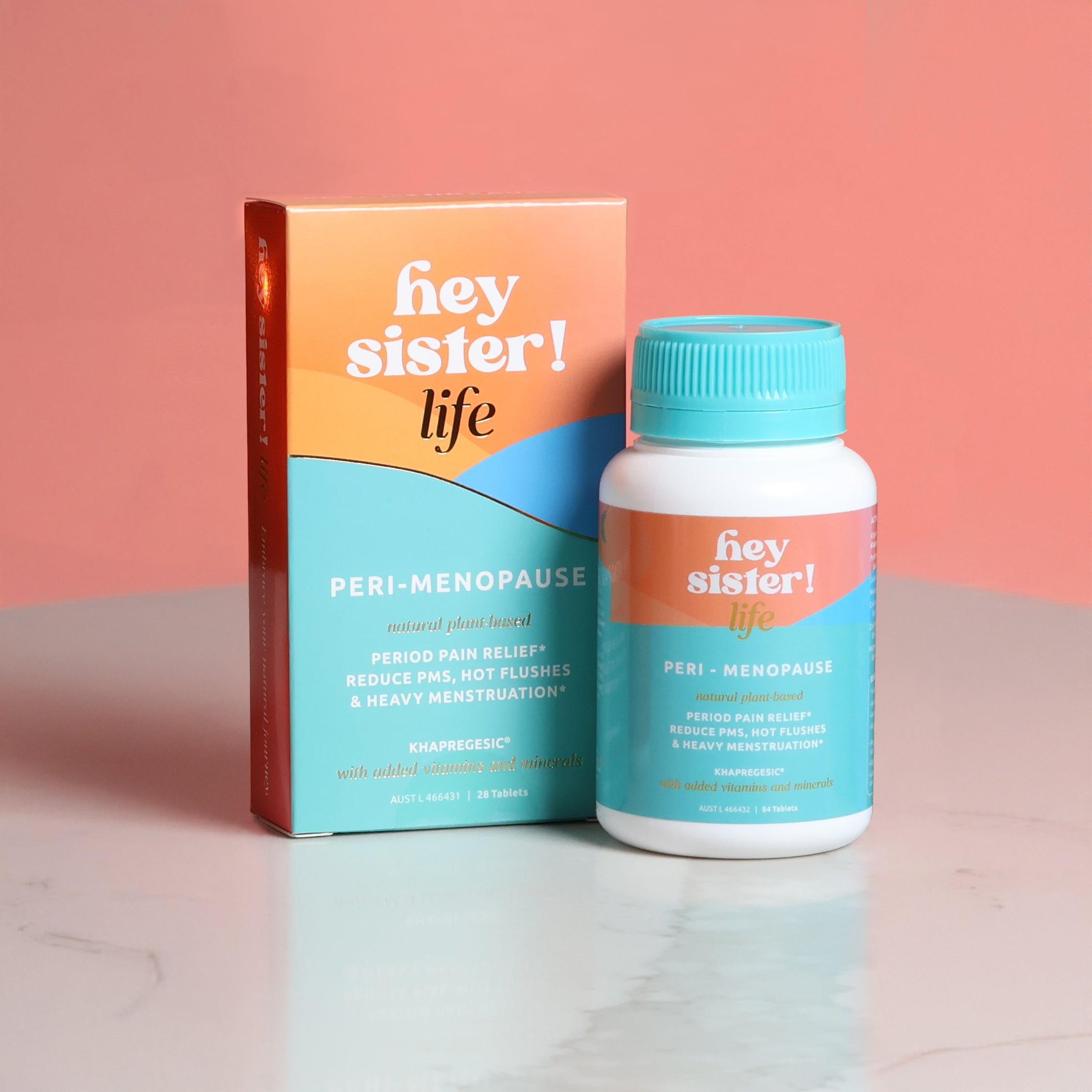
If you’re someone who prefers drug-free wellness tools, Hey Sister!’s plant-based approach is designed to fit into real routines — the ones that happen between meetings, school pick-ups, and boarding calls. (Always check with a qualified health professional if you’re pregnant, breastfeeding, or managing a medical condition.)
FAQs
Is motherhood really happening later in Australia?
Yes — ABS data shows a major shift toward births in the 30–39 age range. (ABS 2023)
What is the “motherhood penalty” in Australia?
It refers to the negative impact childbirth can have on women’s employment, hours and wages. Treasury and OECD analyses show effects can persist for years. (Treasury 2024; OECD 2024)
Why do mums do more unpaid care than dads?
National reporting shows women still do more unpaid work and childcare, influenced by norms, policy design and workplace expectations. (Office for Women 2024)
How does travel affect new mums’ mental health?
Travel can disrupt sleep, routines and support systems. Perinatal mental health guidelines emphasise assessing social factors and access to support. (COPE 2023)
What are common barriers to perinatal care in rural Australia?
Distance, transport, fragmentation and isolation are commonly reported barriers; communication, social support and tech-enabled care can help. (PubMed 2024)
Did COVID change maternity care experiences in Australia?
Yes. Many women reported feeling unsupported and anxious, though some experienced benefits like more rest and bonding. (PMC 2021)
How can partners better share the mental load?
Start with visibility: list recurring tasks, agree ownership (not “helping”), and build systems that don’t default back to mum. Evidence shows the care gap remains large. (Office for Women 2024)
What does “good mother” pressure look like today?
Research suggests modern motherhood norms can be intense, sometimes conflicting, and linked to guilt and identity strain. (Wiley review 2022; qualitative study 2022)
What workplace policies actually help mums?
Paid parental leave design and uptake, flexible work, and childcare affordability are repeatedly flagged as key levers. (OECD 2024; WGEA)
Where can I find trusted Australian perinatal mental health guidance?
COPE provides evidence-based guidance for perinatal mental health care. (COPE 2023)