If cycle syncing on the internet feels like a part-time job you never applied for, you are not imagining it.
Somewhere along the way, “understanding your cycle” got turned into a full-blown lifestyle assignment. Eat this on day seven. Train like that on day nineteen. Plan your life around ovulation. Rest properly in luteal. Become your best self, hormonally.
Meanwhile, you are standing in the kitchen wondering why you opened the fridge.
So let’s clear something up.
Understanding your cycle should not feel like more admin. It should not come with a spreadsheet, a rulebook, and the creeping sense that you are somehow doing womanhood incorrectly.
It should feel like context.
Relief.
A quiet, “Oh… that makes sense.”
That is what cycle awareness is actually for.
Not to optimise yourself into oblivion. Not to turn your body into a project. Just to help you understand what is happening so you can stop assuming every shift in mood, energy, appetite, pain, or patience is a personal failure.
The problem was never your cycle
For years, women were taught to respond to their cycle in one of two ways.
Ignore it. Push through. Do not make a fuss.
Or…
Track it. Optimise it. Fix it. Manage it perfectly.
Different messaging. Same pressure.
Because either way, the responsibility lands on you to override or control something that is already doing a lot.
That is why so many women feel disconnected from their body or weirdly bad at managing it. Either they were taught to ignore what they feel, or they were handed so many “rules” that paying attention now feels exhausting.
Neither is support.
Cycle awareness is not about becoming better at handling yourself. It is about understanding your patterns so you stop blaming yourself for them.
And that matters more than it should.
Menstrual health literacy is still patchy, including here in Australia, with many women left to piece together information themselves rather than being properly supported².
So if you have been winging it with painkillers, heat packs, cancelled plans, and vibes, that is not a failure.
That is the system.
What cycle awareness actually means
At its simplest, cycle awareness is noticing patterns.
That is it.
Not tracking everything. Not over-analysing every mood. Not needing an app to tell you who you are today.
Just noticing.
You might notice that the days before your period are when your patience is lowest and your jeans feel like emotional warfare. You might notice your energy dips at the same point every month. Or that once your period arrives, things ease slightly after a day or two.
That is not you being dramatic.
That is information.
And information is useful.
Because when you can see a pattern, you stop turning it into a personality flaw.
Instead of:
“What is wrong with me?”
It becomes:
“Oh. This again.”
Menstrual education and awareness have been shown to improve knowledge, confidence, and attitudes when delivered in a normal, practical way¹.
Which makes sense. Most people do better with context than criticism.
No, your brain does not fall apart once a month
Let’s deal with one of the more irritating myths.
Women do not become cognitively unreliable across their cycle.
A 2025 meta-analysis found no solid evidence that women’s cognitive abilities meaningfully change across the menstrual cycle³.
So no, you are not less intelligent in luteal.
You are not suddenly bad at your job.
You are not hormonally incapable of making decisions.
But that does not mean your experience stays the same either.
Because symptoms are real.
Pain is real.
Sleep disruption is real.
Bloating is real.
Mood shifts are real.
Healthdirect Australia lists common PMS symptoms including irritability, mood swings, bloating, and breast tenderness linked to hormonal changes⁴.
So the more accurate reframe is this:
Your competence is not the problem.
Your capacity might shift.
Your comfort might change.
And that matters.
The phases, without the lecture
You do not need to memorise a hormone chart to understand your cycle. But having a rough idea helps.
Menstrual phase
Your period. Often lower energy, cramps, fatigue. This is not laziness. It is biology⁴.
Follicular phase
After your period. Energy may start to lift. Things can feel clearer, easier.
Ovulation
Mid-cycle. Some women feel more social or confident. Others feel nothing special at all.
Luteal phase
Before your period. This is where PMS often shows up. Mood changes, bloating, fatigue, sleep issues⁴.
And this bit matters.
PMS is not just “being a bit moody”.
Women with PMS have been shown to experience higher absenteeism and more days of reduced productivity⁵. More frequent symptoms have also been linked to later depression diagnoses in longitudinal research⁶.
That does not mean panic.
It does mean take it seriously.
If symptoms are severe, worsening, or disrupting your life, that is not something to “push through”. Healthdirect also recognises PMDD as a more severe form of PMS⁴.
What this looks like in real life
Cycle awareness is not about control.
It is about context.
Because once you recognise patterns, you can respond differently.
Maybe you stop scheduling everything important in the few days you know you feel flat.
Maybe you swap high-intensity workouts for something gentler when your body is clearly not on board.
Maybe you stop calling yourself lazy every month and realise your energy dip is predictable.
That is the shift.
Not perfection.
Just less self-blame.
Simple tracking can support this too. Digital interventions and cycle awareness tools have shown benefits for wellbeing and understanding when they are simple and not overwhelming⁷.
What gets in the way
Most women are not struggling because this is complicated.
They are struggling because the messaging is.
Too many rules.
Too much optimisation.
Too much pressure to “get it right”.
Add to that confusion about what is normal versus what needs support², plus the lingering stigma around talking about periods at all⁴.
So women minimise.
They push through.
They keep going while quietly feeling awful.
And assume they are the only one.
They are not.
What actually helps
Usually, it is not a full life overhaul.
It is:
Better information
Less shame
Small adjustments
Support that feels realistic
Even low-effort, web-based lifestyle and relaxation approaches have shown improvements in symptoms⁸.
Which tells us something important.
Support does not have to be extreme to work.
Where Hey Sister! fits
At Hey Sister!, we are not here to give you more rules.
You do not need more admin.
You do not need more pressure.
You do not need to become “good” at having hormones.
You need support that fits into real life.
That is why our approach is simple: understand your cycle, and support your body consistently.
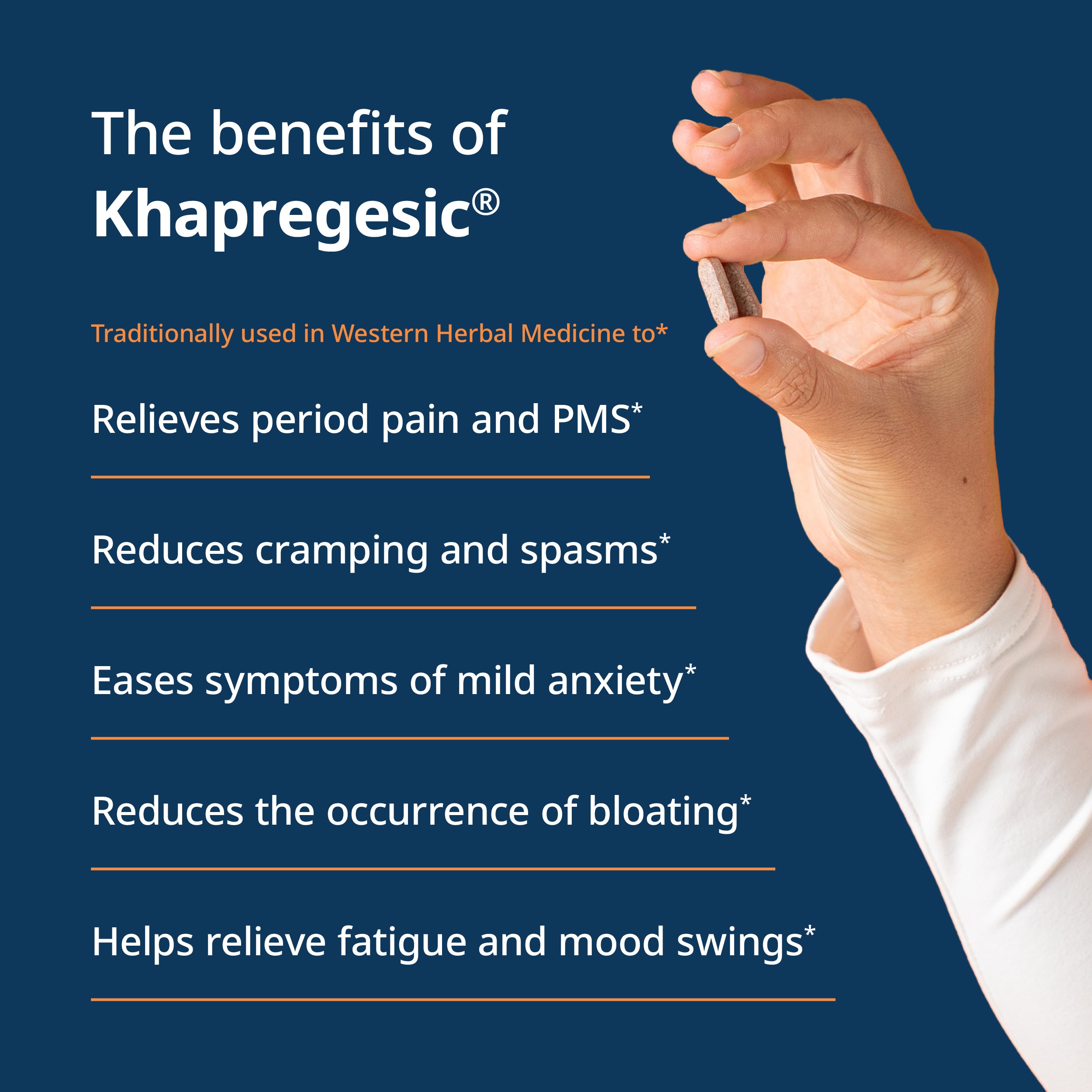
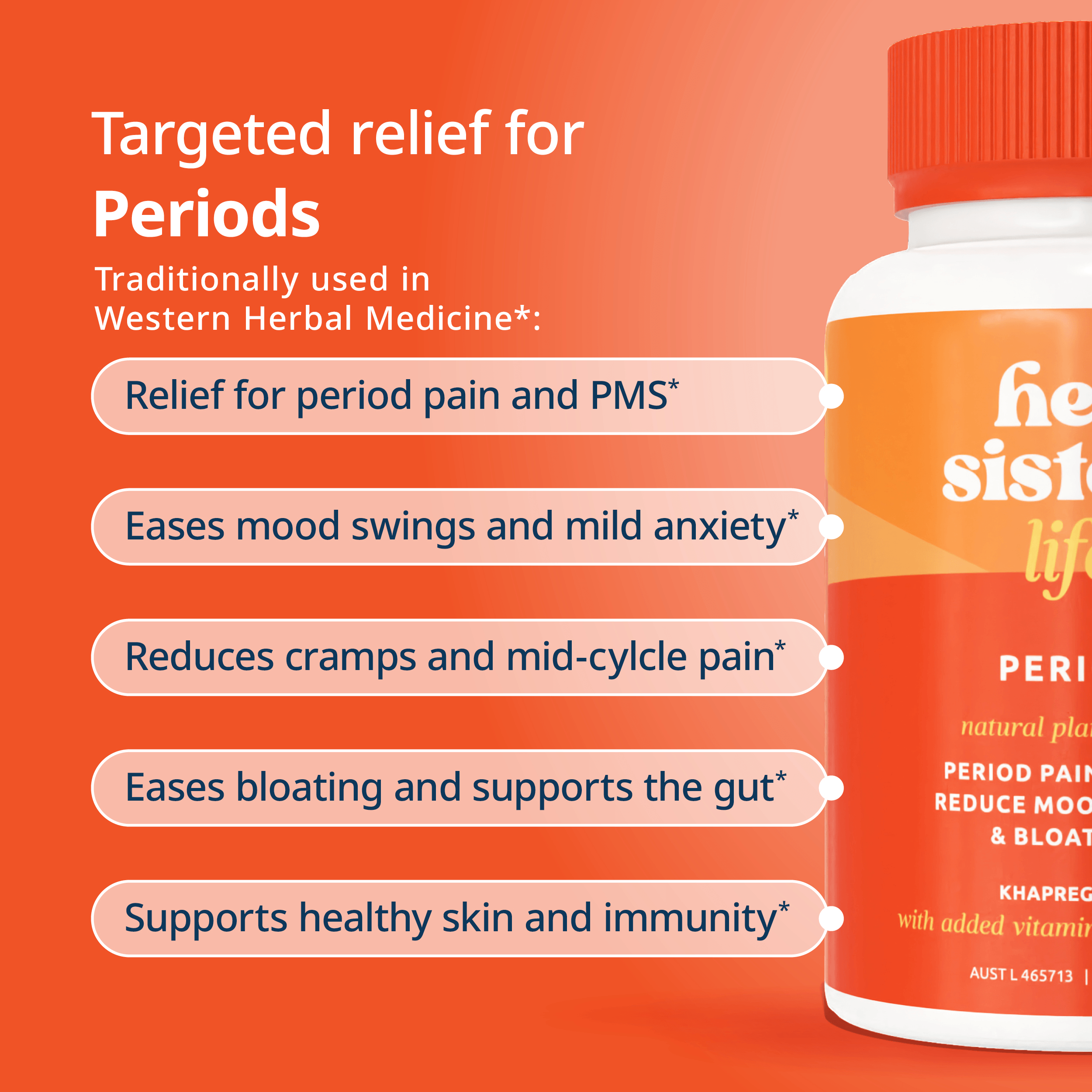
For example, a 2025 randomised, double-blind, placebo-controlled trial found that Khapregesic® was associated with greater reductions in menstrual pain and overall menstrual distress, along with improvements in emotional wellbeing⁹.
Not a 47-step routine.
Just support.
Because when your body is already doing a lot, the answer should not be more effort.
It should be more support.
The no-faff version
You do not need to master your cycle.
You do not need to optimise your hormones.
You do not need to turn self-care into a side hustle.
You just need enough understanding to stop blaming yourself for what your body is trying to tell you.
That is what cycle awareness is for.
And if that leads you to feel more in control, more supported, or simply less confused?
Good.
That is not weakness.
That is wisdom.
Explore support that works with your cycle, not against it
If this hit home, explore our range of plant-based support designed for period pain, PMS, and hormonal wellbeing.
Here’s to less homework and more understanding. 🧡
FAQs
What is cycle syncing, and do I need to follow it exactly?³
Cycle syncing is the idea of adjusting your lifestyle - like exercise, food, and workload - based on different phases of your menstrual cycle.
But no, you do not need to follow it exactly (or at all).
For many women, strict cycle syncing can feel overwhelming and unrealistic. A simpler approach is cycle awareness - noticing patterns in your energy, mood, and symptoms, and responding with small, flexible adjustments instead of rigid rules.
Is it normal to feel anxious or emotional before my period?⁴
Yes, it can be.
Hormonal changes in the lead-up to your period can affect mood, leading to feelings like irritability, anxiety, or low mood. These are common PMS symptoms.
That said, if your anxiety or mood changes feel intense, worsening, or are interfering with your daily life, it is worth speaking to a healthcare professional.
Why do I feel bloated in the luteal phase?⁴
Bloating before your period is very common.
Hormonal shifts in the luteal phase can affect fluid balance and digestion, which can leave you feeling puffy, uncomfortable, or like your clothes suddenly do not fit properly.
It is frustrating, but it is also a normal physiological response - not something you caused or need to “fix” perfectly.
Do hormones affect productivity and work performance?⁵
They can, but not in the way people often assume.
Research does not show major changes in cognitive ability across the cycle, but symptoms like pain, fatigue, poor sleep, and mood changes can affect how your day feels and how much capacity you have.
So it is not that you are less capable - it is that your body might need more support at certain times.
Are women’s cognitive abilities worse during certain phases?³
No.
Current research does not support the idea that women’s cognitive abilities significantly decline during any phase of the menstrual cycle.
You are not less intelligent or less capable depending on where you are in your cycle. However, symptoms like fatigue or discomfort can still affect how you feel day-to-day.
What’s the difference between PMS and PMDD?⁴
PMS (premenstrual syndrome) includes a range of physical and emotional symptoms before your period, such as mood swings, bloating, fatigue, and irritability.
PMDD (premenstrual dysphoric disorder) is a more severe form of PMS. It can involve intense mood changes, depression, anxiety, or irritability that significantly impact daily life.
If your symptoms feel severe or overwhelming, it is important to seek medical advice.
When should I see a doctor for PMS symptoms?⁴
You should consider speaking to a GP or healthcare professional if your symptoms:
-
are severe or worsening
-
interfere with work, school, or daily life
-
include intense mood changes, anxiety, or depression
-
do not improve with basic support
You deserve proper support - not just to be told to “push through”.
What helps with menstrual pain and menstrual distress?⁹
Support can look different for everyone, but helpful approaches may include:
-
heat (like a hot water bottle)
-
gentle movement or stretching
-
prioritising rest and sleep
-
managing stress
-
evidence-informed support options
Plant-based options like Khapregesic® have been shown in clinical research to help reduce menstrual pain and overall menstrual distress when used consistently.
Can tracking my cycle improve wellbeing?⁷
It can.
Tracking simple patterns like mood, energy, or pain can help you better understand your cycle and reduce the “what is wrong with me?” feeling.
You do not need to track everything - just one or two things consistently can be enough to spot patterns and respond with more awareness.
How do I start cycle awareness without feeling overwhelmed?¹²
Start small.
Pick one thing to track - like mood, energy, or pain - for one cycle. That is enough.
From there, make one small adjustment based on what you notice. Not a full routine. Not a life overhaul.
Cycle awareness is not about doing more.
It is about understanding more.
References
Evans, R. L., et al. (2022). Systematic review of educational interventions to improve menstrual health in young adolescent girls. BMJ Open, 12(6), e057204. https://bmjopen.bmj.com/content/12/6/e057204
Armour, M., Hyman, M. S., Al-Dabbas, M., Parry, K., Ferfolja, T., Curry, C., MacMillan, F., Smith, C. A., & Holmes, K. (2021). Menstrual health literacy and management strategies in young women in Australia: A national online survey of young women aged 13–25 years. Journal of Pediatric and Adolescent Gynecology, 34(2), 135–143. https://pubmed.ncbi.nlm.nih.gov/33188935/
Jang, D., Zhang, J., & Elfenbein, H. A. (2025). Menstrual cycle effects on cognitive performance: A meta-analysis. PLoS ONE, 20(3), e0318576. https://journals.plos.org/plosone/article?id=10.1371/journal.pone.0318576
Healthdirect Australia. (2025). Premenstrual syndrome (PMS). https://www.healthdirect.gov.au/premenstrual-syndrome-pms
Carmichael, J. A., et al. (2004). A prospective assessment investigating the relationship between work productivity and impairment with premenstrual syndrome. PubMed. https://pubmed.ncbi.nlm.nih.gov/15247803/
Bhat, A. N., et al. (2023). [I need the article title to complete this one accurately]. PMC. https://pmc.ncbi.nlm.nih.gov/articles/PMC10076728/
Zanini, A., et al. (2024). Mobile health apps for menstrual tracking: User experience and adherence. JMIR mHealth and uHealth, 12(1), e54124. https://mhealth.jmir.org/2024/1/e54124/
Lopresti, A. L., Smith, S. J., & Ferdinands, F. R. (2025). An examination into the safety and efficacy of Khapregesic®, a Khaya senegalensis preparation, on women experiencing menstrual pain and menstrual distress: A randomized, double-blind, placebo-controlled trial. International Journal of Women’s Health, 17, 2025–2038. https://pubmed.ncbi.nlm.nih.gov/40672875/
Jean Hailes for Women’s Health. (n.d.). Ask an expert: PMS and PMDD. https://www.jeanhailes.org.au/uploads/Health-professionals/Events/ask-an-expert-PMS-PMDD.pdf
Queensland Health. (n.d.). Breaking the cycle: A guide to understanding and managing premenstrual dysphoric disorder (PMDD). https://www.health.qld.gov.au/newsroom/features/breaking-the-cycle-a-guide-to-understanding-and-managing-premenstrual-dysphoric-disorder-pmdd
Reddit user cyclesyncing. (2024). Cycle syncing for beginners. https://www.reddit.com/r/cyclesyncing/comments/1af3zte/cycle_syncing_for_beginners/