Your periods have changed. They might be heavier than they used to be, more painful, hanging around for longer or arriving with the sort of unpredictable timing that makes planning a weekend away feel unnecessarily ambitious.
Because you’re in your 40s, perimenopause is an obvious explanation, and in many cases it may well be part of what is happening. Bleeding patterns can change considerably during the menopause transition, including longer and heavier episodes, so a different-looking period is not automatically a sign that something else is wrong.¹
There is, however, a useful difference between knowing that something is common and assuming that it explains every change you are experiencing.
When periods become significantly different from your usual pattern, or pain and bleeding begin interfering with work, sleep, exercise, relationships or everyday plans, there can be value in looking at the broader picture. Adenomyosis is one condition that can overlap with some of the experiences commonly associated with perimenopause, yet it receives considerably less attention.
This is not an invitation to diagnose yourself after an enthusiastic evening with Google. It is simply useful information to have when your body appears to have rewritten a rulebook you thought you understood.
Adenomyosis in plain English
Adenomyosis is a condition in which tissue resembling the lining of the uterus is found within the muscular wall of the uterus. It can be associated with heavy menstrual bleeding, painful periods and pelvic pain, although experiences vary considerably and around one third of people with adenomyosis may have no symptoms at all.²
Part of the reason adenomyosis remains relatively unfamiliar is the way it was historically identified. For many years, the most definitive diagnosis relied on examining uterine tissue after hysterectomy, which meant much of the early understanding of the condition came from people who had already reached the point of surgery.³
Modern imaging has changed that landscape. International ultrasound criteria now give clinicians a shared way of describing features associated with adenomyosis, allowing the condition to be investigated while someone still has their uterus rather than only being discovered afterwards.⁴
That shift matters because it changes the conversation from something that may once have been found late in the process to something that can now be considered much earlier.
Why the overlap in your 40s can become confusing
A review of adenomyosis research found that the median age at surgical diagnosis generally falls between 40 and 50, although the authors also point out that this partly reflects the age at which hysterectomies have historically been performed rather than proving that adenomyosis begins during that decade.³
The timing is still significant because this is also the broad stage of life when perimenopause becomes part of the conversation for many women.
Changing periods are a recognised feature of the menopause transition. In the Study of Women’s Health Across the Nation, which followed 1,320 midlife women, 77.7 per cent experienced at least three episodes of bleeding lasting 10 days or more, while 34.5 per cent experienced repeated episodes of heavy bleeding lasting three or more days.¹
Those figures are useful because they prevent us from turning every heavy period in midlife into a medical alarm bell. Longer or heavier bleeding can genuinely occur during perimenopause, and for many women that may be exactly what is happening.
The difficulty comes when a familiar explanation becomes the only explanation considered.
Adenomyosis can sit in the same broad symptom territory, which means a woman may reasonably assume that heavier bleeding or increasing period pain is simply another part of the transition. Sometimes it will be, while in other circumstances the symptoms may warrant further investigation.
Recognising that possibility does not require suspicion or panic. It simply leaves room for a more complete conversation.
The very human habit of deciding it is “not bad enough”
Periods have a strange way of becoming a private comparison exercise. If you are still making it to work, somebody else bleeds more heavily or you have managed to keep most of your plans intact, it can be remarkably easy to decide that whatever is happening does not quite qualify for attention yet.
Australian research shows how common that thinking is. A 2023 Jean Hailes survey found that 78 per cent of women aged 18 to 44 had experienced heavy, painful or irregular periods during the previous five years. Among those affected, 69 per cent said the symptoms made work or study difficult, 75 per cent reported difficulty with everyday activities and 74 per cent said their mental or emotional wellbeing was affected.⁵
Despite that level of disruption, only 56 per cent had discussed their symptoms with a doctor. Among those who had not sought medical advice, 79 per cent said their symptoms were not “bad enough”, while 34 per cent believed nothing could be done.⁵
Clinical guidance uses a much more practical benchmark. NICE defines heavy menstrual bleeding according to its effect on a person’s physical, emotional and social quality of life rather than requiring them to reach a particular measured volume of blood loss before their experience becomes significant.⁶
That distinction can be surprisingly freeing, because it moves the focus away from proving that your period is objectively worse than someone else’s and towards noticing what has changed in your own life.
A period that repeatedly disrupts sleep, makes exercise difficult, affects concentration at work or forces you to organise your day around bathroom access is giving you useful information. You do not need to turn that information into a diagnosis before you mention it.
The diagnosis gap behind adenomyosis
A 2026 cohort study reported an average diagnostic delay of approximately 11 years for adenomyosis.⁷ One of the more revealing findings was that participants who reported more symptoms and saw more healthcare providers experienced longer delays rather than shorter ones.
That makes the usual advice to simply “speak up” feel somewhat incomplete.
Many women do speak up. The difficulty is that symptoms such as heavy bleeding, pelvic pain and painful periods can sit across several possible explanations, particularly during a stage of life when menstrual changes are already expected.
A qualitative study published in the British Journal of General Practice found that women experiencing heavy menstrual bleeding often normalised what was happening for years. Some assumed they simply needed to tolerate it until menopause, while others delayed seeking further help until symptoms had begun disrupting work, relationships or normal daily activities.⁸
Taken together, those findings paint a more complicated picture than women simply failing to ask for help. When a symptom has been normalised culturally, overlaps with other conditions and arrives during a life stage already known for menstrual changes, it becomes easier for both the person experiencing it and the healthcare system around them to treat it as something to endure.
Details that can make a medical appointment more useful
You do not need to know the correct medical terminology before talking to a healthcare professional. In many cases, a clear description of what has changed and how it is affecting you is considerably more useful than trying to arrive with a self-diagnosis.
Keeping track of bleeding duration, changes in flow, when pain occurs and how symptoms affect sleep, work, exercise or social plans can provide useful context. Changes from your own usual pattern matter as well, particularly when they continue over several cycles rather than appearing as a one-off.
Fatigue, dizziness or difficulty concentrating may also be relevant when heavy menstrual bleeding is part of the picture. An expert review published in the American Journal of Obstetrics and Gynecology highlighted the relationship between heavy menstrual bleeding, iron deficiency and iron deficiency anaemia, noting that this connection is often poorly recognised and normalised.⁹
Of course, fatigue in your 40s has no shortage of possible explanations competing for the job, particularly when sleep and hormones have decided to become less predictable at the same time. The practical value lies in mentioning the combination rather than assuming tiredness and heavy bleeding must be unrelated.
Modern investigation is very different from the old picture
The historical association between adenomyosis and hysterectomy can make the condition sound more alarming than the current investigation pathway actually is.
NICE guidance recommends taking a history that considers the pattern of bleeding, related symptoms such as pelvic pain or pressure and the effect those symptoms are having on quality of life. A full blood count is also recommended when assessing heavy menstrual bleeding.⁶
Where adenomyosis is suspected, transvaginal ultrasound is the preferred first investigation.⁶ The development of internationally agreed ultrasound terminology has also helped clinicians describe features associated with adenomyosis more consistently, moving the condition away from something that could only be confirmed after surgery.⁴
Imaging is not perfect, and the research is still evolving. A 2025 observer-agreement study found that some ultrasound features of adenomyosis were interpreted more consistently than others, leading the authors to conclude that the definitions still need refinement.¹⁰
That finding is better understood as part of an evolving diagnostic field rather than a reason to distrust imaging. When significant symptoms continue despite an initial investigation, the wider clinical picture still matters and may warrant an ongoing conversation with a healthcare professional.
Making room for more than one explanation
The growing awareness of perimenopause has been enormously valuable because women are finally being given language for changes that previous generations were often expected to tolerate quietly.
The next step is making sure that useful awareness does not become another reason to oversimplify what is happening.
Perimenopause and adenomyosis are not competing explanations where accepting one means rejecting the other. A changing cycle may genuinely be part of the menopause transition while other symptoms still deserve investigation.
If you are struggling to explain that distinction during an appointment, a simple sentence can do the job without requiring you to arrive with a theory about what is wrong: “I know I may be in perimenopause, but these symptoms have changed and they are affecting my life, so I’d like them looked into.”
There is no need to make the case more dramatic than it is. There is equally no requirement to wait until your life has become dramatically disrupted before mentioning what has changed.
Understanding your body does not always begin with knowing the answer. Sometimes it begins with having enough information to recognise that another conversation is worth having.
Where LIFE Peri-menopause fits
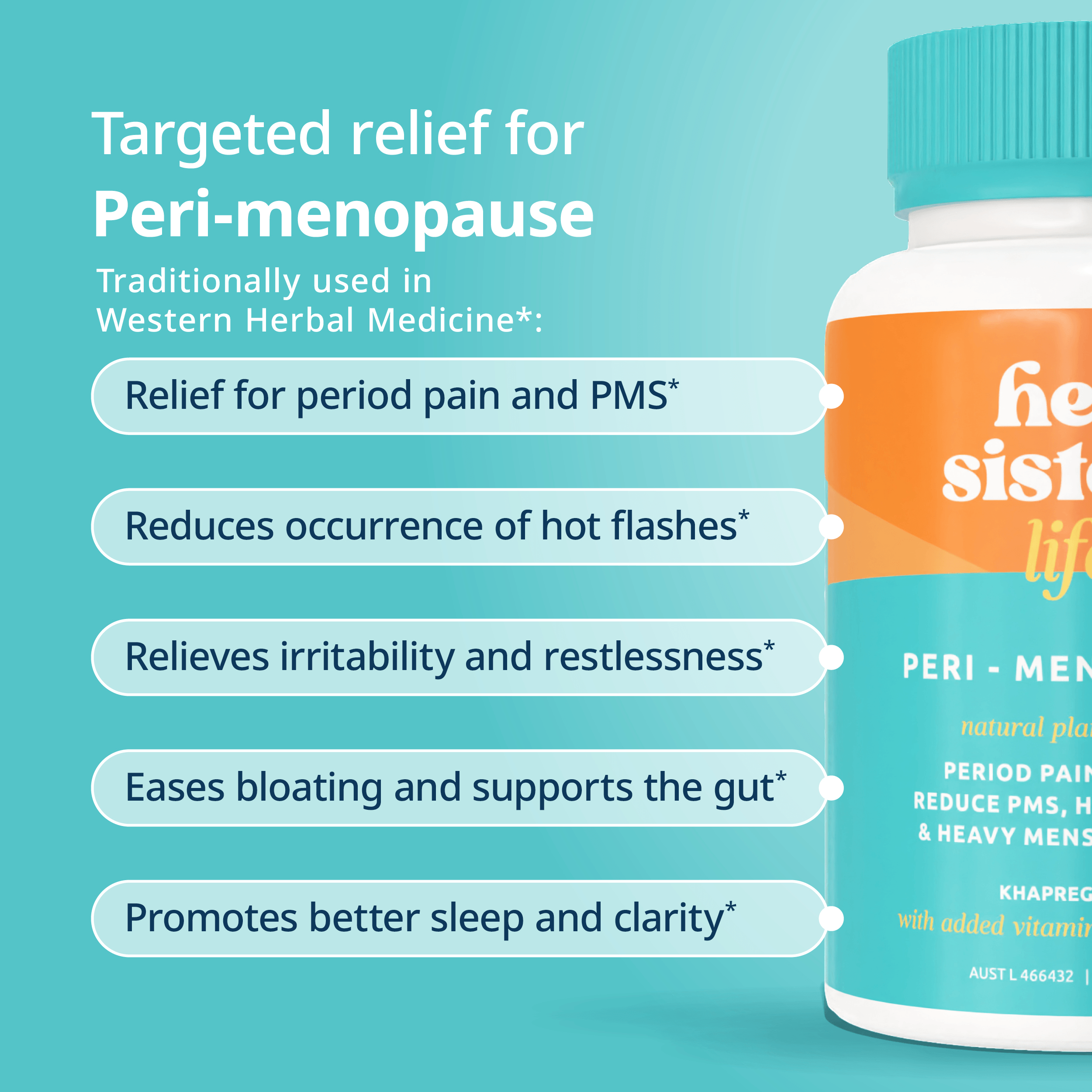
Perimenopause rarely arrives as one tidy symptom at a time. You might be dealing with hot flushes, fatigue, brain fog, restless nights, mood swings, bloating and that general feeling that your body has quietly changed the operating system without sending you the update notes.
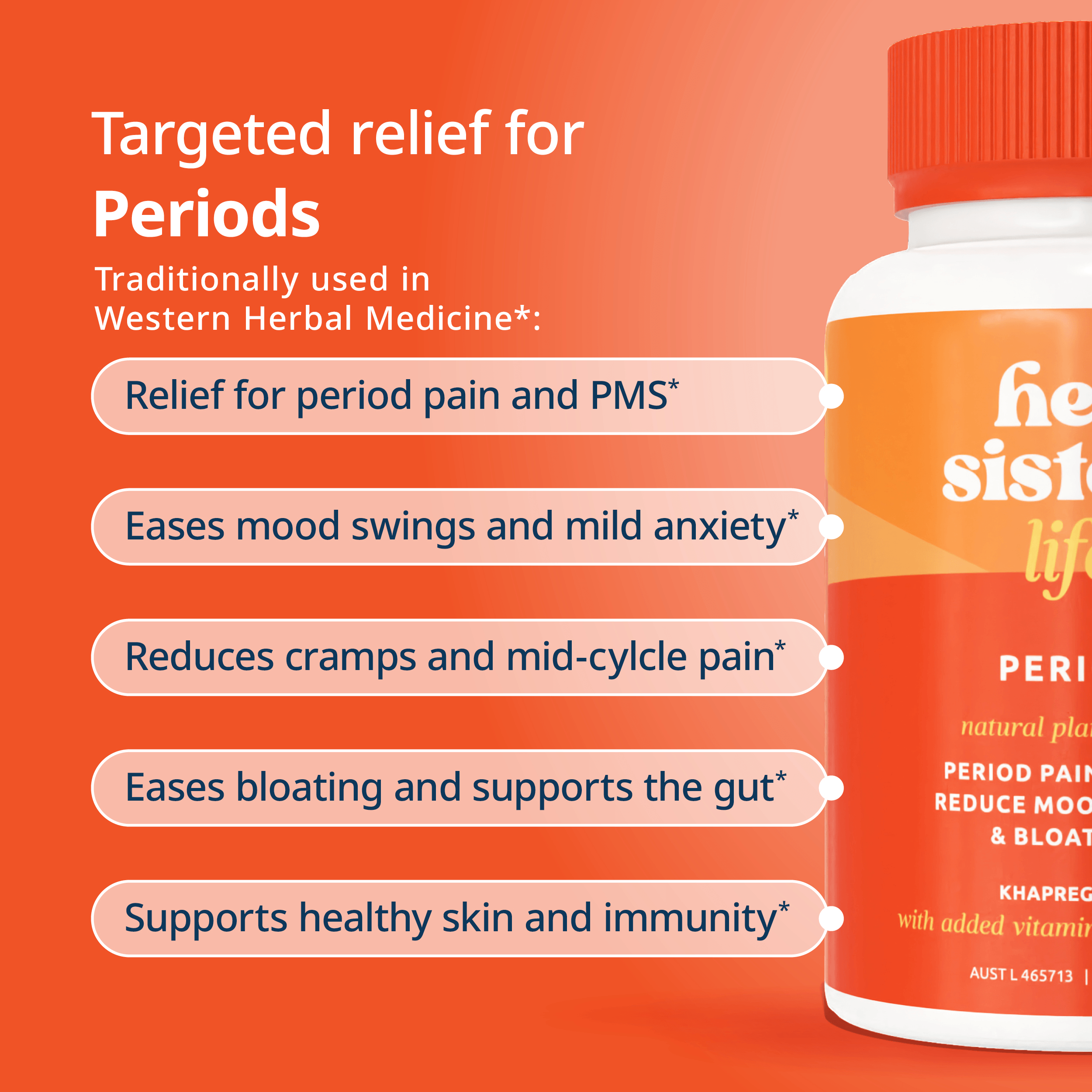
LIFE Peri-menopause is a plant-based formula created to support women through that shifting mix of symptoms, with ingredients including Khapregesic®, magnesium, vitamin B6, calcium, zinc, vitamin D3 and K2.
It is designed to provide plant-based relief for hot flushes, fatigue, brain fog and restless nights, while helping to steady mood swings and support deeper, more uninterrupted sleep. The formula also supports bone strength, hormonal balance and gut comfort, including bloating, so the focus is not just one symptom in isolation but the wider picture of how perimenopause can show up day to day.
For women who feel as though everything is shifting at once, the aim is simple: more support, more steadiness and a little less feeling like your hormones have hijacked the control panel.
Frequently asked questions about adenomyosis and perimenopause
Can perimenopause cause heavy periods?
Heavier or longer episodes of bleeding can occur during the menopause transition. In the Study of Women’s Health Across the Nation, prolonged and heavy bleeding episodes were common among midlife women moving through this stage.¹ Even when perimenopause is the likely explanation, a noticeable change can still be worth discussing with a healthcare professional when it persists, feels significantly different from your usual pattern or begins affecting everyday life.
Can adenomyosis be mistaken for perimenopause?
Adenomyosis and perimenopause are different, but some of the experiences associated with them can overlap. Perimenopause can alter bleeding patterns, while adenomyosis may be associated with heavy menstrual bleeding, painful periods and pelvic pain.¹ ² Because symptoms alone cannot confirm what is causing the change, persistent or disruptive symptoms may warrant a conversation with a healthcare professional rather than automatically being attributed to perimenopause.
Is adenomyosis common in your 40s?
Adenomyosis has historically been diagnosed most often between the ages of 40 and 50, although that figure needs some context because diagnosis was traditionally closely linked with hysterectomy.³ Imaging studies have also identified adenomyosis in younger people, which means the age at which the condition is diagnosed should not be assumed to be the age at which it first developed.
How is adenomyosis diagnosed?
Where adenomyosis is suspected, transvaginal ultrasound is commonly recommended as a first investigation.⁶ Modern ultrasound criteria allow clinicians to look for recognised features associated with adenomyosis without relying on hysterectomy for confirmation, although interpretation continues to evolve as researchers refine the diagnostic criteria.⁴ ¹⁰
Do you need a hysterectomy to diagnose adenomyosis?
A hysterectomy is no longer required simply to begin investigating adenomyosis. Historically, examining uterine tissue after hysterectomy was considered the most definitive way to confirm the condition, but modern imaging now allows clinicians to identify features associated with adenomyosis without surgery.³ ⁴ Treatment options also vary depending on symptoms, circumstances and individual preferences, so a diagnosis does not automatically mean hysterectomy.
Can heavy periods cause iron deficiency?
Heavy menstrual bleeding can contribute to iron deficiency and iron deficiency anaemia, both of which may affect energy levels and concentration.⁹ Fatigue has many possible causes, particularly during midlife, so the most useful approach is to mention ongoing tiredness alongside changes in bleeding and allow a healthcare professional to decide whether blood testing or further investigation is appropriate.
When should you see a doctor about changes to your period?
New, persistent or disruptive changes to bleeding, pain or your menstrual cycle are reasonable to discuss with a healthcare professional, particularly when they begin interfering with sleep, work, exercise, relationships or everyday activities. Clinical guidance specifically considers the effect of heavy menstrual bleeding on quality of life, which means you do not have to wait until symptoms become unbearable before seeking advice.⁶
References
-
Paramsothy, P., Harlow, S. D., Greendale, G. A., Gold, E. B., Crawford, S. L., Elliott, M. R., Lisabeth, L. D., Randolph, J. F. Jr, & Cain, K. C. (2014). Bleeding patterns during the menopausal transition in the multi-ethnic Study of Women’s Health Across the Nation: a prospective cohort study. BJOG: An International Journal of Obstetrics & Gynaecology, 121(12).
-
Kolovos, G., Dedes, I., Imboden, S., & Mueller, M. (2024). Adenomyosis - A Call for Awareness, Early Detection, and Effective Treatment Strategies: A Narrative Review. Healthcare, 12(16), 1641.
-
Upson, K., & Missmer, S. A. (2020). Epidemiology of Adenomyosis. Seminars in Reproductive Medicine, 38(2-3), 89-107.
-
Harmsen, M. J., Van den Bosch, T., de Leeuw, R. A., Dueholm, M., Exacoustos, C., Valentin, L., Hehenkamp, W. J. K., Groenman, F., De Bruyn, C., Rasmussen, C., et al. (2022). Consensus on revised definitions of Morphological Uterus Sonographic Assessment features of adenomyosis: results of modified Delphi procedure. Ultrasound in Obstetrics & Gynecology, 60(1), 118-131.
-
Jean Hailes for Women’s Health. (2023). Bothersome periods experienced by Australian women aged 18 to 44 years. National Women’s Health Survey report.
-
National Institute for Health and Care Excellence. (2018, updated 2021). Heavy menstrual bleeding: assessment and management. NICE Guideline NG88.
-
Breton, Z., Gouesbet, S., Indersie, E., Gabillet, M., Tran, V-T., Aflak, N., Borghese, B., Petit, E., Roman, H., Millepied, A-C., Nève De Mevergnies, M., & Kvaskoff, M. (2026). Endometriosis Diagnostic Delay and Its Correlates: Results from the ComPaRe-Endometriosis Cohort. Journal of Women’s Health.
-
Dutton, B., & Kai, J. (2023). Women’s experiences of heavy menstrual bleeding and medical treatment: a qualitative study in primary care. British Journal of General Practice, 73(729), e294-e301.
-
Munro, M. G., Mast, A. E., Powers, J. M., Kouides, P. A., O’Brien, S. H., Richards, T., Lavin, M., & Levy, B. S. (2023). The relationship between heavy menstrual bleeding, iron deficiency, and iron deficiency anemia. American Journal of Obstetrics and Gynecology, 229(1), 1-9.
-
Kadam, N., Khalid, S., & Jayaprakasan, K. (2025). How Reproducible Are the Ultrasound Features of Adenomyosis Defined by the Revised MUSA Consensus? Journal of Clinical Medicine, 14(2), 456.